Physical Address
304 North Cardinal St.
Dorchester Center, MA 02124
Physical Address
304 North Cardinal St.
Dorchester Center, MA 02124

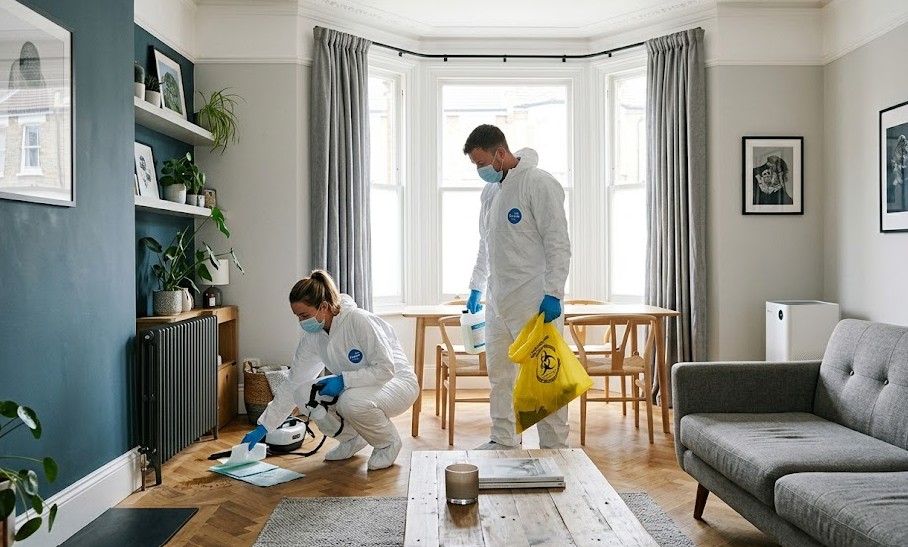
Professional biohazard, hoarding, and death cleanup services are specialised remediation operations that safely remove biological hazards, contaminated materials, and accumulated clutter from residential and commercial properties. These services combine industrial-grade disinfection, regulated waste disposal, and trauma-informed care to restore environments to safe, habitable conditions.
Most people never expect to need these services until the moment they do.
In this guide, we will cover what biohazard and crime scene cleanup involves, how hoarding and rodent remediation work, and why professional intervention is essential. I will share specific protocols, real measurements, and practical insight drawn from years of working alongside remediation teams in the field.
Professional biohazard cleanup services include the removal, disinfection, and regulated disposal of blood, bodily fluids, pathogens, and contaminated materials from affected areas, typically using EPA-registered disinfectants rated to kill bloodborne pathogens at concentrations above 1,000 ppm active ingredient.
The scope of a biohazard job is almost always larger than it appears on arrival. Blood, for instance, migrates through flooring gaps, under baseboards, and into subfloor materials within hours of an incident, which means a surface wipe-down rarely tells the complete story. Professional technicians use ATP meters and UV lighting to locate contamination invisible to the naked eye, then systematically work outward from the source.
Every reputable biohazard company operates under OSHA’s Bloodborne Pathogen Standard (29 CFR 1910.1030), which mandates specific personal protective equipment, exposure control plans, and regulated waste handling procedures. This is not optional compliance. A technician entering a blood-contaminated scene without a full Tyvek suit, N95 or P100 respirator, and double-gloved hands is creating additional liability for everyone involved.
The disposal side of the work is equally regulated. Biohazardous waste must be segregated into red-bag containers, transported by licensed carriers, and processed at approved medical waste facilities. When a cleanup company talks about “full-service” remediation, that chain of custody from scene to disposal facility is what separates a genuine professional operation from someone with a mop and some bleach.
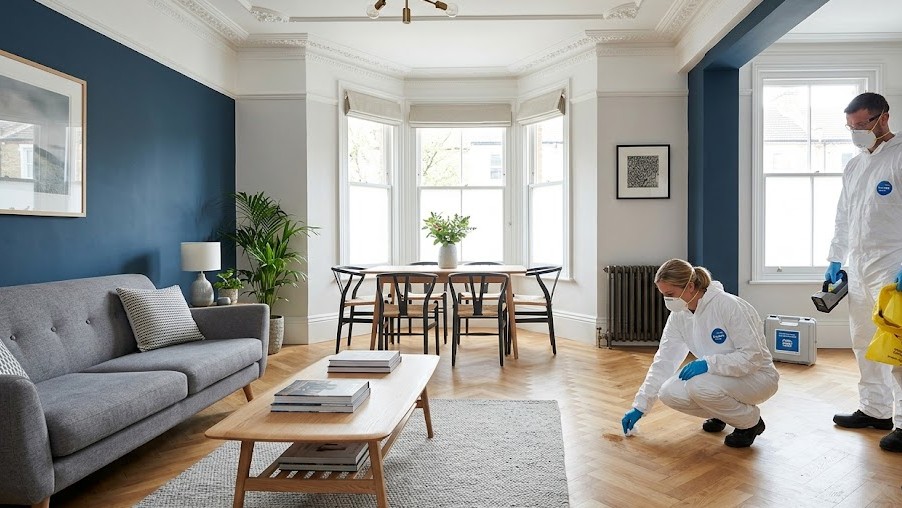
Crime scene and trauma cleanup is the professional decontamination and restoration of locations affected by violent death, suicide, homicide, or unattended death, addressing biological residues that standard cleaning products cannot safely neutralize and that law enforcement personnel are not responsible for removing.
Here is something many families learn too late: once investigators clear a scene, the cleanup responsibility falls entirely to the property owner. Police and first responders document and investigate but do not remediate. That gap in public understanding causes real harm when grieving families attempt the cleanup themselves, often without adequate PPE or knowledge of pathogen risks.
Unattended death scenes, where a person passes away and is not discovered for days or weeks, present some of the most complex remediation challenges in the industry. Decomposition accelerates dramatically above 50 degrees Fahrenheit, and the resulting biological matter penetrates porous surfaces including carpet padding, wood subfloor, drywall, and even concrete if the concrete is unsealed. I have seen cases where visible staining occupied less than two square feet of flooring but required removal of 40 square feet of subfloor material beneath it.
According to the CDC’s guidelines on infection control and environmental services, surfaces contaminated with blood or body fluids require treatment with EPA-registered hospital-grade disinfectants, and standard consumer-grade products simply do not meet that threshold. Trauma cleanup technicians are trained to assess structural penetration, calculate remediation depth, and certify clearance through post-remediation verification testing before a space is reoccupied.
Professional biohazard cleanup steps involve a systematic sequence beginning with hazard assessment and PPE donning, progressing through contamination removal, disinfection, odor treatment, and disposal, and concluding with post-remediation verification testing to confirm pathogen levels meet safe re-occupancy standards.
Here is the step-by-step process professional remediation teams follow on a biohazard scene.
This checklist outlines the core steps involved in a professional biohazard or trauma cleanup service.
One detail that surprises most clients is step three. Negative air pressure containment is not just caution for caution’s sake. In an uncontained space, disturbing dried biological material kicks microscopic particles into the air, and those particles travel. A proper containment setup with HEPA-filtered negative air machines running throughout the job is what keeps the rest of a home clean while remediation happens in one room.
Hoarding cleanup is the structured removal, sorting, and disinfection of excessive accumulated belongings and hazardous materials from a property affected by hoarding disorder, a process that typically spans multiple days and may involve biohazard remediation when biological contamination from animals, rodents, or long-term neglect is present.
The emotional dimension of hoarding cleanup separates it from any other type of remediation work. These are people’s homes and, in many cases, people’s lives compressed into rooms that can barely be navigated. I have worked on properties where the path from front door to kitchen measured just 18 inches wide and the ceiling-height accumulation had been building for a decade or more. Approaching that environment with judgment rather than compassion is the fastest way to break trust and derail a project.
A careful hoarding cleanup usually begins with an assessment. From there, the work may include item removal, bagging, sorting, odor treatment, surface cleaning, disinfection, and disposal. When the situation involves animals, rodents, or long-term neglect, biohazard remediation may be needed in addition to clutter removal.
The EPA’s guidance on indoor environmental health notes that hoarded properties frequently present multiple overlapping hazards including mold growth from moisture trapped under debris, pest infestations, and ammonia levels from animal waste that exceed safe indoor air quality thresholds. These are not cosmetic issues. They are health hazards that require remediation protocols, not just a cleaning crew with bin bags.
| Phase | Activity | Typical Duration | Hazard Level |
|---|---|---|---|
| Assessment | Walkthrough, photo documentation, scope planning | 1 to 2 hours | Low |
| Item Removal | Sorting, bagging, loading for disposal or donation | 1 to 5 days | Moderate |
| Biohazard Remediation | Disinfection of contaminated surfaces and materials | 1 to 3 days | High |
| Odor Treatment | Hydroxyl or fogging treatment throughout property | 4 to 24 hours | Moderate |
| Surface Cleaning | Deep clean of all accessible floors, walls, fixtures | 1 to 2 days | Low to Moderate |
The table above reflects real-world project timelines across residential hoarding cases of varying severity. Larger properties with extensive animal-related contamination typically sit at the upper end of every range, and the biohazard remediation phase can extend further when structural materials require removal and replacement.
Rodent dropping cleanup is the safe removal and disinfection of urine, feces, nesting materials, dead rodents, and contaminated insulation or belongings. This service may be needed in homes, garages, crawl spaces, attics, sheds, vehicles, storage units, and commercial buildings.
Rodent waste is considerably more hazardous than most homeowners realise. Hantavirus, for instance, is transmitted through dried rodent urine and feces when disturbed particles become airborne, and vacuuming or dry-sweeping rodent droppings is one of the most dangerous mistakes a property owner can make during a DIY cleanup attempt. The correct approach is wet application of a disinfectant solution first, then careful removal using disposable materials, never a vacuum without HEPA filtration.
Crawl spaces and attics present the most complex rodent remediation scenarios because contamination typically extends into insulation batts, which absorb urine over months or years of rodent activity. Standard fiberglass insulation contaminated by rodents cannot be salvaged and must be removed entirely, bagged in sealed poly, and replaced. In a typical residential attic, I have seen anywhere from 8 to 20 bags of contaminated insulation removed from a single infestation site before the structural surfaces beneath were clear for disinfection.
The disinfection phase uses EPA-registered products specifically effective against Hantavirus, Leptospira, and Salmonella, the three pathogens most commonly associated with rodent contamination. Technicians apply product to all affected surfaces at the labeled concentration and allow appropriate dwell times before any wiping or removal, a sequence that is non-negotiable when working in enclosed spaces with limited air exchange.
Professional biohazard cleanup technicians are required because biological hazards including bloodborne pathogens, decomposition byproducts, and rodent-borne diseases pose serious health risks that standard cleaning products, household PPE, and untrained personnel cannot safely or legally address, with improper handling carrying criminal liability under OSHA regulations.
The liability question alone is enough reason for most property owners to make the call. Knowingly allowing a biohazard-contaminated space to remain inadequately remediated can create secondary exposure risks for occupants, subsequent tenants, or future buyers, and documentation of proper professional remediation is increasingly required during real estate transactions in states with disclosure laws.
Beyond the legal dimension, there is the practical reality of what DIY cleanup attempts actually accomplish. In my experience working alongside remediation teams, the calls that come in after a failed DIY attempt are among the most difficult to handle, not because the contamination is worse, but because the affected family has already been through significant additional trauma trying to manage something they were never equipped to deal with. The physical and emotional cost of attempting biohazard remediation without proper training is almost always higher than the cost of calling a professional from the start.
Professional remediation companies also carry specialised liability insurance and, in most states, hold contractor licenses specific to biohazard and trauma cleanup work. That licensing structure exists because the stakes of getting it wrong, whether through incomplete disinfection, improper waste disposal, or inadequate PPE, affect not just the property owner but also waste haulers, disposal facilities, and the broader community. When you hire a certified remediation team, you are not just buying a service. You are transferring a set of legally defined responsibilities to people who are trained, equipped, and insured to carry them.
Choosing the right professional biohazard, hoarding, or death cleanup service requires verifying state licensing, OSHA bloodborne pathogen compliance, EPA-registered product use, insurance coverage above $1 million general liability, and documented post-remediation verification testing before any service agreement is signed.
Ask the right questions before any contract is signed. A legitimate company should be able to produce their OSHA training certifications, a list of the EPA-registered disinfectants they use, and proof of general liability insurance with a minimum of $1 million in coverage without hesitation. Companies that deflect these questions or cannot provide documentation on the spot are companies worth avoiding.
Pricing transparency matters equally. Reputable firms will walk through a scope of work before quoting and will explain clearly what their post-remediation verification process looks like. Hidden fees for waste disposal, mileage, or PPE that appear only after the job is complete are red flags, and so is any company that quotes a flat rate for a scene they have not assessed in person.
Many biohazard cleanups are partially or fully covered by homeowner’s insurance, and a good remediation company will have experience working directly with insurance adjusters to document scope, submit invoices, and advocate for appropriate coverage. If a company has no experience with insurance billing or cannot explain the claims process, that is worth weighing carefully before you hire.
Professional biohazard, hoarding, and death cleanup services exist to protect human health, restore property, and carry the weight of situations that nobody should navigate alone or without proper training and equipment.
The through-line connecting every service covered in this guide is the same: biological hazards require documented, certified, and compliant handling. Whether that means a trauma scene cleared within 24 hours of an unattended death, a hoarding property restored over five days, or a crawl space freed of a decade of rodent contamination, the process is only complete when post-remediation verification confirms the space is genuinely safe.
If you are facing any of these situations, start with a phone call to a licensed remediation company for an assessment. Ask about their certifications, their disinfectant standards, and their post-remediation testing process. The right company will answer every question clearly and without pressure.
You do not have to manage this alone, and you should not have to.
Key takeaways from this guide:
What is biohazard cleanup? Biohazard cleanup is the professional removal and decontamination of biological hazards including blood, bodily fluids, and pathogen-laden materials from residential or commercial properties. According to the Wikipedia entry on biohazard remediation, these services follow strict protocols for handling materials classified as infectious or potentially infectious waste.
Does homeowner’s insurance cover biohazard cleanup? Many homeowner’s insurance policies cover biohazard remediation when the event qualifies as a covered loss under the policy’s terms, such as an unattended death or crime scene on the property. Coverage limits and exclusions vary, so contacting your insurance adjuster immediately after the incident is the fastest way to confirm what applies to your specific situation.
How long does a biohazard cleanup take? A standard trauma or crime scene cleanup typically takes between four hours and two days depending on the extent of contamination, the size of the affected area, and whether structural materials require removal. Complex unattended death scenes with decomposition penetrating subfloor materials can extend the timeline to three or four days including drying and verification testing.
Is it safe to enter a property after an unattended death before cleanup? Entering a property contaminated by an unattended death before professional remediation is complete poses serious health risks from airborne decomposition byproducts and bloodborne pathogens present on surfaces. Only certified remediation technicians wearing appropriate PPE should access the affected areas until post-remediation clearance testing confirms the space is safe.
What diseases are associated with rodent droppings? Rodent droppings and urine are associated with Hantavirus Pulmonary Syndrome, Leptospirosis, and Salmonellosis, all of which can be transmitted through contact with or inhalation of dried rodent waste particles. Professional rodent dropping cleanup eliminates these hazards through wet disinfection protocols and HEPA-filtered air handling that prevent particles from becoming airborne during removal.
How do professionals dispose of biohazardous waste? Biohazardous waste is segregated into certified red-bag containers at the scene, transported by licensed medical waste carriers, and processed at approved incineration or treatment facilities under state and federal regulations. Every step is documented through a chain-of-custody manifest that the remediation company retains as proof of compliant disposal.
Can hoarding cleanup be done in one day? Most hoarding cleanups cannot be completed in a single day because the volume of material, the sorting requirements, and any necessary biohazard remediation phases each require dedicated time and separate crews. Moderate to severe hoarding cases typically require between three and seven days of work, with biohazard and odor treatment phases extending the timeline further when animal or rodent contamination is present.
What certifications should a biohazard cleanup company hold? A qualified biohazard cleanup company should hold OSHA bloodborne pathogen training certifications, state contractor licensing where required, and carry a minimum of $1 million in general liability insurance. Additional certifications from the American Bio Recovery Association or the Institute of Inspection Cleaning and Restoration Certification indicate a company that has invested in professional standards beyond the minimum legal requirements.