Physical Address
304 North Cardinal St.
Dorchester Center, MA 02124
Physical Address
304 North Cardinal St.
Dorchester Center, MA 02124

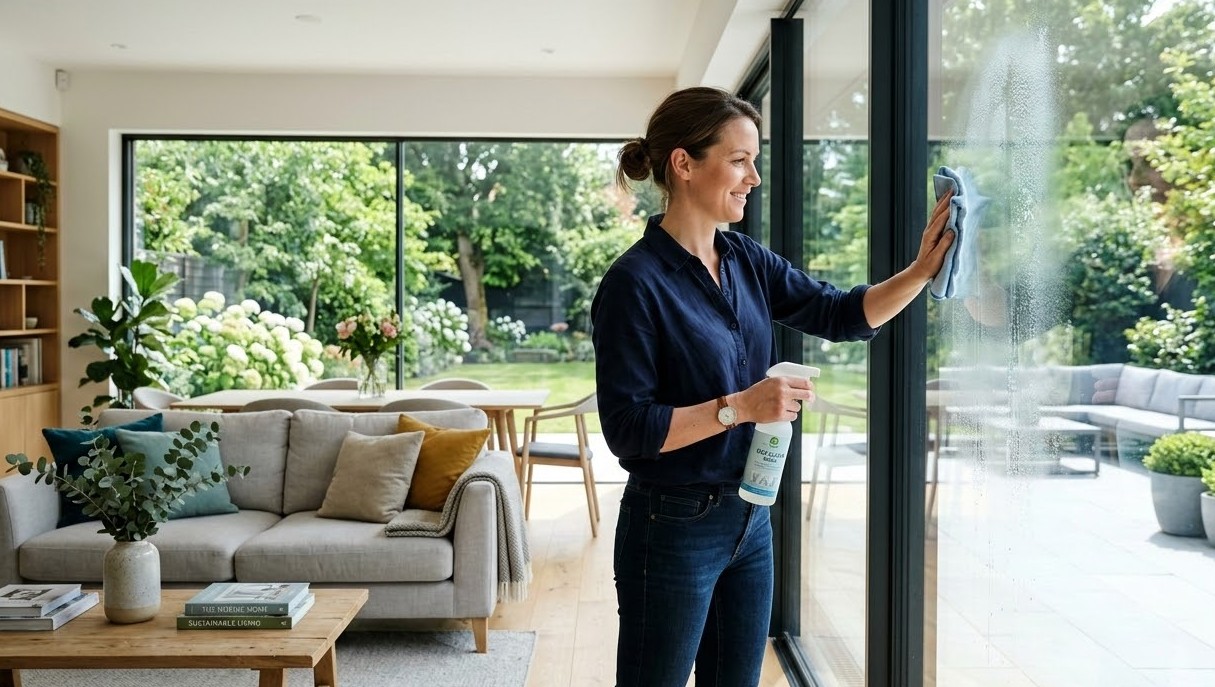
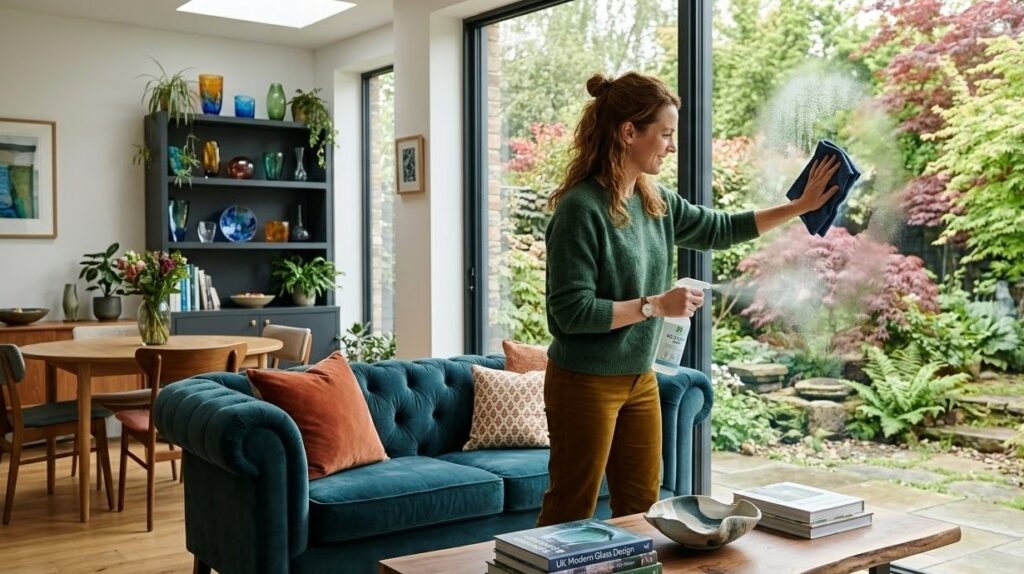
Glass window cleaning involves using the correct solution, tools, and technique to remove dirt and streaks without damaging the glass surface or leaving residue. Professional cleaners combine distilled water with specific additives to achieve crystal-clear results that last longer than standard household methods.
The secret lies in the water chemistry and application method.
In this comprehensive guide, we’ll cover what cleaning solutions work best for different glass surfaces and what common products you should avoid. I’ll share practical measurements and real-world scenarios from my 15 years as a professional cleaner, including the exact water ratios I use for residential and commercial properties.
Glass windows can be cleaned effectively using a 50/50 mixture of distilled white vinegar and water, pure distilled water with 2ml of washing-up liquid per litre, or isopropyl alcohol diluted to 30% concentration for heavily soiled glass. Microfibre cloths or professional squeegees paired with these solutions remove dirt without scratching whilst leaving minimal streaking.
The vinegar solution is what I reach for most often in domestic settings. It cuts through fingerprints and light grime brilliantly, and you can mix it in any spray bottle you have lying around.
For exterior windows covered in pollen or road dust, I add that tiny amount of washing-up liquid to the distilled water. The surfactants help break down oily residues that plain water just pushes around. I learned this the hard way after spending 20 minutes re-cleaning a conservatory because I’d used tap water with nothing added (the calcium deposits left white streaks everywhere).
Isopropyl alcohol works wonders on windows near kitchens where grease has built up over months. I keep a separate spray bottle with the 30% solution specifically for these stubborn spots. Just remember to work in a ventilated area because the fumes can be quite strong in enclosed spaces.
| Cleaning Solution | Dilution Ratio | Best For | Approximate Cost per Litre |
|---|---|---|---|
| White Vinegar + Water | 50/50 | Interior windows, light dirt | £0.40 |
| Distilled Water + Washing-up Liquid | 2ml per litre | Exterior windows, pollen | £0.15 |
| Isopropyl Alcohol (30%) | 30% alcohol, 70% water | Grease, kitchen windows | £1.20 |
| Commercial Glass Cleaner | Ready-to-use | Quick touch-ups | £2.50 |
The table shows that home-mixed solutions cost substantially less than commercial products whilst delivering comparable or better results for most residential cleaning tasks.
Professional window cleaners use deionized or reverse-osmosis purified water with total dissolved solids measuring below 10 parts per million, often adding 5ml of specialist detergent per 10 litres for heavy soiling. This purified water prevents mineral deposits and streaking because it contains no calcium, magnesium, or other compounds that leave residue when water evaporates from glass surfaces.
I invested in a basic deionization system about eight years ago, and it transformed my business overnight. Before that, I was spending extra time buffing windows dry to avoid the white marks that tap water inevitably left behind.
The water purity makes an enormous difference on solar panels and conservatory roofs. When you’re working at height with a water-fed pole, you can’t exactly climb up to buff everything dry afterwards. The purified water dries completely clear, even in direct sunlight (which normally accelerates spotting with standard tap water).
Most professionals I know use a two-stage filtration system. The first stage removes sediment and chlorine, whilst the second stage uses resin beads to remove dissolved minerals. You can test your water purity with a TDS meter, which costs about £15 and tells you exactly how many particles remain in each litre.
Window cleaning should never involve abrasive scouring pads, bleach-based cleaners, or ammonia solutions on tinted or coated glass because these products scratch protective films, discolour window frames, and degrade rubber seals around double-glazed units. Paper towels and newspaper also leave lint fibres and ink residue that create additional streaking problems requiring re-cleaning.
Bleach seems like it would be brilliant for cleaning because it’s so powerful, right? I once watched a homeowner spray neat bleach on their UPVC window frames thinking it would brighten them up. Within minutes, the white frames had developed yellowish patches that never came out. Bleach oxidizes plastic and degrades the stabilizers that keep UPVC looking fresh.
Ammonia is another product that seems logical but causes problems long-term. It can cloud the space between double-glazed panes if it seeps through damaged seals. I’ve seen this happen on south-facing windows where the constant expansion and contraction from heat cycles had created tiny gaps in the seal.
Scouring pads and rough cloths scratch glass more easily than most people realize. You won’t see the damage immediately, but after a year of aggressive scrubbing, you’ll notice the windows look perpetually hazy even when clean. Those microscopic scratches scatter light and trap dirt particles that become increasingly difficult to remove.
Window cleaning technique involves applying solution from top to bottom in overlapping horizontal strokes, squeegeeing in reverse-S patterns with 5cm overlap between passes, and immediately wiping squeegee blades after each stroke to prevent dirty water from redistributing across clean glass. Professional-grade results require cleaning when glass temperature measures between 10-20°C because solutions evaporate too quickly above 20°C and don’t activate properly below 10°C.
This step-by-step approach ensures streak-free windows regardless of weather conditions or glass size.
The temperature requirement catches many people out. I learned this during a particularly hot July afternoon when I was cleaning a shopfront. The solution was drying before I could squeegee it off, leaving horrible streaks that required three attempts to fix. Now I schedule exterior work for morning or late afternoon during summer months.
The reverse-S pattern takes practice but it’s genuinely more efficient than straight horizontal strokes. You maintain momentum whilst ensuring every section overlaps slightly with the previous one. I can clean a standard 120cm x 100cm window in about 45 seconds using this method, compared to nearly two minutes when I used to work in straight lines.

Glass windows and doors require professional-standard cleaning every 4-6 weeks for exterior surfaces in urban or coastal environments, whilst interior glass typically needs attention every 8-12 weeks depending on household activities and cooking frequency. Ground-floor windows accumulate dirt approximately 40% faster than upper-floor windows due to increased exposure to splash-back from rain, vehicle emissions, and pedestrian activity.
Weather conditions accelerate the cleaning schedule dramatically. After a period of heavy rain, I notice that windows near busy roads develop a film of traffic pollution mixed with water spots within just a few days. The combination of diesel particulates and calcium in rainwater creates a stubborn residue that becomes harder to remove the longer you leave it.
I’ve kept detailed records of my regular commercial clients’ properties, and the difference between 4-week and 8-week cleaning schedules is remarkable. Properties cleaned monthly maintain better clarity and actually require less scrubbing time per visit because dirt hasn’t had chance to bond with the glass surface. It’s rather like how regular hoovering takes less effort than deep-cleaning a carpet you’ve neglected for months.
Homes with children or pets need interior glass cleaned more frequently. Nose prints, finger marks, and the mysterious smudges that seem to appear overnight all build up faster than you’d expect. I recommend keeping a spray bottle of diluted vinegar solution under the sink for quick daily touch-ups between proper monthly cleans.
Clean windows improve home energy efficiency by allowing approximately 15-20% more natural light transmission compared to dirty glass, reducing artificial lighting requirements during daylight hours and lowering electricity consumption. The solar heat gain coefficient also increases when exterior glass is free from dirt films that block infrared radiation, providing passive heating benefits during winter months whilst proper cleaning of interior condensation prevents mould growth that damages window seals and reduces thermal performance.
I first noticed this energy connection when working on a client’s Victorian terrace that hadn’t had professional window cleaning in over two years. After I’d finished the job, the homeowner mentioned she’d turned on her lights two hours later than usual that evening because the rooms stayed naturally bright much longer.
The heating benefit is less obvious but equally significant. Double-glazed units rely on clean glass surfaces to maximize solar gain during winter. A layer of grime on the exterior pane can reduce heat transmission by 10-15%, which might not sound dramatic but adds up over a heating season. I worked with an energy assessor once who was calculating heat loss for a building survey, and she specifically noted that dirty south-facing windows were preventing optimal passive solar heating.
Condensation management is something many homeowners overlook when considering window cleaning. Interior condensation that’s left to dry naturally leaves mineral deposits that etch into glass over time. These microscopic pits trap more moisture in future, creating a cycle of deterioration. Regular cleaning with proper solutions removes these deposits before they become permanent, maintaining the window’s thermal efficiency and extending its operational lifespan.
Regular window cleaning serves as an early-warning system for property maintenance issues including failing seals around double-glazed units, frame deterioration, and drainage problems around sills. Professional cleaners identify approximately 60% of window-related defects during routine cleaning visits, allowing homeowners to address problems before they escalate into expensive repairs requiring full window replacement.
This diagnostic aspect of window cleaning is something I value more than the aesthetic results. I’ve spotted cracked seals, rotten timber frames, and blocked weep holes that would have caused serious damage if left unnoticed for another six months.
One memorable example involved a ground-floor bay window where I noticed water pooling inside the bottom rail of the frame. The homeowner had no idea there was a problem because it wasn’t visible from inside the room. We discovered that the external drainage holes were blocked with paint from a previous decoration job, causing water to back up into the frame cavity. Fixing it cost about £120. Replacing the entire frame after water damage would have been closer to £2,500.
The relationship between clean windows and overall property condition extends beyond immediate maintenance concerns. Properties with consistently clean windows typically show better general upkeep. It’s rather like how a clean car tends to get serviced regularly, whereas a filthy vehicle often has neglected mechanical issues. The attention to visible details usually reflects attention to less visible systems.
Key Takeaways:
Glass and window cleaning delivers better results when you match your technique and timing to environmental conditions rather than following a rigid schedule. The cleanliness of your windows directly impacts natural lighting, energy efficiency, and your ability to spot developing maintenance problems before they become expensive failures.
I’ve found that homeowners who embrace regular cleaning as preventative maintenance rather than just aesthetics save substantially on both energy costs and repair bills. The time investment for proper monthly exterior cleaning typically amounts to about 90 minutes for an average three-bedroom house, whilst the benefits compound over years of sustained property value and comfort.
Start with the simplest approach: distilled white vinegar mixed 50/50 with water, a decent squeegee, and cleaning scheduled for a mild morning. You’ll immediately notice the difference compared to whatever method you’ve been using previously, and you’ll develop the confidence to refine your technique over time.
How do you clean glass windows without leaving streaks? Clean glass windows streak-free by using purified water with total dissolved solids below 10 PPM or a 50/50 vinegar-water solution, applying with overlapping horizontal strokes, then squeegeeing in reverse-S patterns whilst wiping the blade after each pass. Temperature control is critical because cleaning above 20°C causes solutions to evaporate before removal, creating the streaks you’re trying to avoid.
What is the best homemade solution for cleaning windows? The best homemade window cleaning solution combines 500ml distilled white vinegar with 500ml water for interior glass, or 1 litre distilled water with 2ml washing-up liquid for exterior windows with heavy soiling. Professional cleaners prefer these mixtures because they cost approximately £0.40 per litre compared to £2.50 for commercial products whilst delivering superior results without leaving chemical residues.
Can you use washing-up liquid to clean windows? Washing-up liquid works excellently for window cleaning when diluted to 2ml per litre of water, creating just enough surfactant action to break down dirt without leaving soap residue that causes streaking. Stronger concentrations above 5ml per litre produce excessive foam that becomes difficult to rinse completely, requiring additional passes that waste time and create opportunities for streaks to form during drying.
Why do my windows look smeared after cleaning? Windows appear smeared after cleaning because you’re using tap water containing dissolved minerals that leave visible deposits when water evaporates, or you’re applying too much solution that doesn’t fully remove before drying. Switching to purified water below 10 PPM total dissolved solids and reducing solution quantity by approximately 30% typically eliminates smearing whilst maintaining effective dirt removal.
What do professional window cleaners charge per window? Professional window cleaners in the UK typically charge £3-£8 per standard window depending on accessibility, size, and location, with ground-floor windows averaging £3-£4 whilst upper-floor windows requiring ladder work cost £6-£8. Complete house cleaning for a three-bedroom property usually ranges from £35-£65 for exterior-only service, rising to £60-£95 when including interior glass surfaces.
How often should you clean windows in the UK? UK homeowners should clean exterior windows every 4-6 weeks in urban or coastal areas where pollution and salt spray accelerate dirt accumulation, whilst rural properties can extend to 8-10 weeks between professional cleaning visits. Interior windows typically require attention every 8-12 weeks, though homes with children or pets benefit from monthly cleaning to manage fingerprints and nose marks.
Is newspaper good for cleaning windows? Newspaper is poor for cleaning windows because modern printing inks contain oils that transfer to glass surfaces, creating smears that require additional cleaning to remove, whilst the paper fibres leave lint particles that become visible in angled lighting. Microfibre cloths or professional squeegees with rubber blades deliver superior results without introducing new contaminants to freshly cleaned glass.
What temperature should water be for cleaning windows? Window cleaning water should measure between 10-20°C for optimal results because solutions applied to glass above 20°C evaporate too quickly and leave streaks, whilst temperatures below 10°C prevent cleaning agents from activating properly and breaking down dirt. Professional cleaners often adjust their working schedule to morning or late afternoon during summer months when ambient temperatures would otherwise exceed this ideal range.