Physical Address
304 North Cardinal St.
Dorchester Center, MA 02124
Physical Address
304 North Cardinal St.
Dorchester Center, MA 02124


Hello! I’m thrilled you’ve found this guide, and I can promise you it’s the culmination of months of research into professional cleaning methods and years of hands-on experience transforming chaotic homes into spotless sanctuaries. Whether you’re preparing for guests, tackling spring cleaning, or simply want to elevate your routine, understanding how professionals approach whole-house cleaning will genuinely change how you view this essential task.
Top-to-bottom cleaning represents the most efficient method for achieving spotless results throughout your home.
Professional cleaners follow this gravitational approach because dust, debris, and cleaning solutions naturally fall downward during the process, meaning you never clean the same surface twice. The method saves approximately 30-40% of total cleaning time compared to random-room approaches whilst delivering superior results.
It’s a revelation once you see it in action.
Top-to-bottom cleaning follows a systematic sequence starting from ceiling level in each room, progressing downward through furniture and fixtures, and concluding with floor surfaces. The UK Health and Safety Executive emphasizes this gravitational cleaning method in commercial settings because it prevents cross-contamination and eliminates redundant work.
The fundamental principle is beautifully simple: gravity is your ally, not your enemy.
Begin at the highest points in each room (ceiling corners, light fixtures, tops of tall furniture), work methodically downward through mid-level surfaces (countertops, tables, windowsills), and finish with floors. This sequence ensures falling dust and debris collect on surfaces you haven’t yet cleaned, rather than soiling freshly cleaned areas.
Most people instinctively understand this concept but fail to implement it consistently. I’ve watched countless homeowners vacuum their floors first, then dust their shelves, inadvertently depositing fresh dust onto their just-cleaned carpets. It’s frustrating and wasteful.
The room-by-room progression matters just as much as the vertical sequence. Professional cleaners typically start in rooms farthest from the main exit (usually bedrooms or bathrooms at the back of the house), working toward the entrance. This approach prevents walking through freshly cleaned areas whilst carrying dirty equipment, which would transfer grime back onto clean surfaces.

Ceiling and Upper Surfaces
Use an extension pole with a microfibre duster attachment to reach ceiling corners, light fixtures, and ceiling fan blades without climbing ladders. These areas accumulate surprising amounts of dust and cobwebs that become invisible until you look up specifically searching for them.
I once cleaned the crown moulding in my dining room after neglecting it for six months, and the grey dust layer that came off was genuinely shocking. The room felt brighter immediately afterward, though I’d never consciously noticed the dimming effect of that accumulated dust.
Work systematically around each room’s perimeter at ceiling height, then move downward to picture frames, door frames, and the tops of bookcases. These horizontal surfaces above eye level trap dust but rarely receive attention during routine cleaning.
Mid-Level Surfaces
Progress downward to furniture surfaces, windowsills, and shelving units between waist and shoulder height. This zone receives the most daily interaction, accumulating fingerprints, spills, and general grime alongside falling dust from higher surfaces.
Use appropriate cleaning solutions for each material (wood polish for wooden furniture, glass cleaner for mirrors, all-purpose cleaner for plastic or painted surfaces). Spray cleaning solution onto your cloth rather than directly onto surfaces to prevent oversaturation and streaking.
Work from back to front and left to right across each surface to ensure complete coverage without missing spots. This methodical approach prevents the common mistake of cleaning in random patterns that inevitably leave uncleaned patches.
Lower Surfaces and Floors
The final stage addresses baseboards, lower cabinet fronts, and finally floor surfaces. By this point, all dust and debris from higher surfaces has settled onto the floor, ready for collection in a single efficient pass.
Vacuum or sweep before mopping to remove dry debris that would otherwise turn into muddy streaks when wet. The US Environmental Protection Agency recommends HEPA-filter vacuums for optimal dust capture, particularly in homes with allergies or respiratory sensitivities.
Mop starting from the farthest corner, working backward toward the room exit so you never walk across freshly mopped areas. This seems obvious, yet I’ve somehow managed to trap myself in corners more times than I care to admit (usually whilst distracted by podcasts).
Professional cleaners complete entire homes in 2-3 hours through motion efficiency, specialized tools, and systematic workflows that eliminate backtracking and duplicate effort. Speed results from optimized technique rather than rushing, allowing thorough cleaning without sacrificing quality.
The secret isn’t working faster—it’s eliminating wasted motion entirely.
Professionals clean multiple surfaces simultaneously by carrying all necessary supplies in a caddy, grouping similar tasks together, and never returning to previously finished areas. This workflow optimization accounts for the dramatic time savings, not superhuman scrubbing speed.
Preparation and Setup
Professional teams spend 10-15 minutes preparing supplies before touching a single surface. They stock cleaning caddies with exactly the products and tools needed for each room type, gather all rubbish bags, and wear aprons with pockets for small items that need relocating.
This preparation eliminates the constant interruptions that plague amateur cleaners—walking back to retrieve forgotten spray bottles, searching for bin bags, or hunting for specific tools. Those seemingly minor interruptions accumulate into 30-40 minutes of wasted time during a whole-house clean.
Colour-coded microfibre cloths prevent cross-contamination whilst accelerating workflow. Blue cloths for glass, yellow for bathrooms, red for toilets, green for kitchens—you never pause to consider which cloth to grab, and you never accidentally transfer bathroom bacteria to kitchen surfaces.
Two-Handed Cleaning Technique
Professionals simultaneously clean with both hands whenever possible. Whilst the right hand wipes down a bathroom mirror, the left hand wipes the surrounding wall. Whilst one hand dusts a bookshelf, the other straightens items as they’re lifted.
This bilateral approach doubles cleaning coverage without increasing time investment. It feels awkward initially, rather like learning to pat your head whilst rubbing your stomach, but becomes automatic with practice.
I started implementing this technique last year, and the difference is remarkable. My bathroom cleaning time dropped from 25 minutes to 15 minutes simply by training my left hand to wipe the shower walls whilst my right hand scrubbed the bathtub.
Strategic Product Application
Professionals spray bathroom cleaner on all surfaces first, allowing the chemicals to break down soap scum and grime whilst they clean other areas. By the time they return to wipe down the shower, the product has done most of the work, requiring minimal scrubbing.
This “spray and walk away” technique works for ovens, stovetops, and heavily soiled surfaces. The Centers for Disease Control and Prevention recommends contact times of 3-5 minutes for most household disinfectants to achieve maximum effectiveness, which aligns perfectly with this approach.
Amateur cleaners tend to spray and immediately wipe, forcing themselves to scrub harder to compensate for insufficient dwell time. It’s exhausting and unnecessary.
Specialized Tools
Extension poles, squeegees, microfibre mops, and vacuum attachments eliminate the physical strain of bending, reaching, and climbing whilst accelerating surface coverage. A telescoping duster cleans an entire ceiling in minutes; doing the same job with a step ladder and handheld duster takes twenty minutes and risks injury.
Professional-grade vacuum cleaners with 5-6 attachments allow cleaning baseboards, upholstery, and tight corners without switching tools. Each tool swap costs 10-15 seconds—multiply that across hundreds of surfaces, and the time loss becomes significant.
The initial investment in quality tools feels substantial (£150-250 for a complete professional setup), but the efficiency gains repay that cost through reduced cleaning time every single week.
A professional house cleaning checklist comprises room-specific tasks organized from highest to lowest surfaces, including ceiling fixtures, furniture, appliances, and floors, with time allocations ensuring comprehensive coverage without oversight. These checklists standardize quality across different cleaners whilst maintaining efficient 90-120 minute timelines for average three-bedroom homes.
Every professional service operates from these detailed checklists, though specific inclusions vary by service level and client preferences.
The fundamental structure remains consistent: each room receives a dedicated section with tasks listed vertically from ceiling to floor, marked off sequentially to prevent missed spots. Digital versions allow customization for individual client needs whilst maintaining the core systematic approach.
Kitchen Checklist Components
Professional kitchen cleaning begins with upper cabinets, light fixtures, and the top of the refrigerator where dust and grease accumulate invisibly. These areas receive attention only during deep cleans, rather than daily maintenance, but dramatically impact overall cleanliness perception.
Countertops, stovetops, and appliance surfaces follow, using degreasing solutions appropriate for each material type. Professional cleaners wipe down small appliances (toasters, kettles, coffee makers) as individual items rather than cleaning around them, which adds 5-10 minutes but eliminates the grimy outlines that betray amateur cleaning.
The sink and taps receive extra attention, including the often-neglected area behind the tap base where soap scum and mould accumulate. Professionals use old toothbrushes or specialized detail brushes for these tight spaces, ensuring genuine cleanliness rather than surface-level appearance.
Cabinet fronts, especially near handles, collect fingerprints and cooking splatter that require dedicated degreasing. Many amateur cleaners skip this step, assuming cabinets don’t need regular attention, but the cumulative effect of weekly cabinet cleaning versus quarterly cleaning is striking.
Floor cleaning concludes the kitchen sequence: sweep, vacuum edges and corners (where sweeping misses debris), then mop starting from the farthest corner toward the exit.

Bathroom Checklist Components
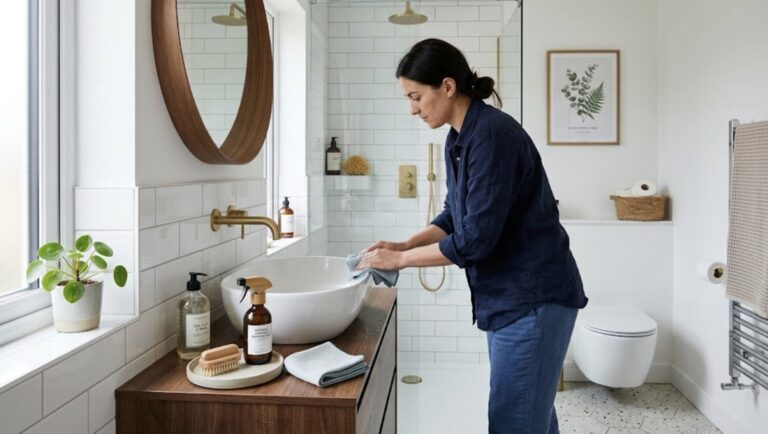
Bathrooms receive the most detailed checklist attention due to hygiene concerns and the variety of specialized surfaces requiring different cleaning approaches. Professional checklists typically allocate 20-25 minutes per full bathroom, including time for product dwell.
The sequence starts with ceiling extraction fans (if present), mirrors, light fixtures, and upper cabinets, followed by shower walls, bathtub, toilet, and sink. Each fixture receives specific attention: toilets get cleaned with dedicated brushes and cloths (never used elsewhere), showers receive anti-mould treatment, and chrome fixtures get polished to eliminate water spots.
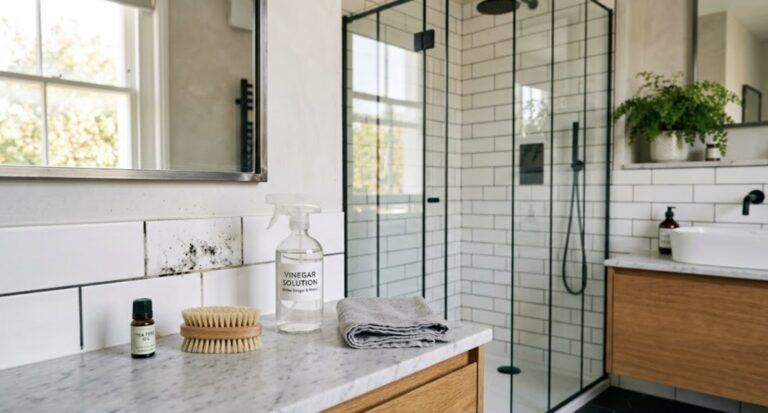
Grout lines in tiled bathrooms present a particular challenge. Professional services typically address grout during monthly or quarterly deep cleans rather than weekly maintenance, using specialized brushes and stronger alkaline cleaners. The UK Health and Safety Executive provides guidelines for safe cleaning product use in poorly ventilated bathroom spaces.
Floor cleaning follows the same sweep-and-mop sequence as kitchens, with extra attention to corners where hair and dust accumulate. Many professionals use disposable mop pads for bathroom floors to prevent cross-contamination with kitchen or living area floors.
Bedroom and Living Area Components
Bedrooms and living spaces emphasize dust removal and surface tidying rather than deep sanitization. Professional checklists address ceiling fans and light fixtures, followed by furniture surfaces, picture frames, windowsills, and decorative items.
Making beds forms part of most professional services, though some clients prefer to handle this personally. When included, professionals use the efficient “hospital corner” technique that creates crisp results in under two minutes per bed.
Vacuuming receives particular attention in bedrooms, including under beds (using extension wands), behind furniture where feasible, and along baseboards where dust accumulates. Many professional services move furniture quarterly for deep cleaning but work around it during weekly or fortnightly visits.
Living areas include additional tasks like cleaning television screens, organizing remote controls and magazines, and spot-cleaning upholstery. These finishing touches differentiate professional services from basic cleaning by creating a genuinely tidy environment rather than just addressing visible dirt.
| Room Type | Standard Clean | Deep Clean | Key Time Factors |
|---|---|---|---|
| Kitchen | 25-30 mins | 45-60 mins | Appliance condition, cabinet quantity, floor size |
| Full Bathroom | 20-25 mins | 40-50 mins | Tile extent, grout condition, fixture count |
| Bedroom | 15-20 mins | 30-40 mins | Clutter level, furniture quantity, carpet vs. hardwood |
| Living Room | 20-25 mins | 35-45 mins | Surface area, decorative items, upholstery cleaning |
These allocations represent professional team averages for standard residential spaces. Individual cleaning times vary significantly based on home condition, clutter levels, and whether occupants maintain tidiness between professional visits. Deep cleaning typically occurs quarterly or biannually, addressing tasks like interior window cleaning, baseboard detail, and appliance deep cleaning that standard weekly or fortnightly services exclude.
The table demonstrates why professional teams quote whole-house pricing rather than hourly rates. A chronically cluttered home requires substantially more time than a regularly maintained space of identical size, even when the underlying cleaning tasks remain the same.
Common house cleaning mistakes include cleaning bottom-to-top which redistributes settled dust, using incorrect products that damage surfaces or leave residue, neglecting high-touch areas like light switches and door handles, and cleaning windows in direct sunlight which causes streaking. These errors waste time, create suboptimal results, and occasionally cause permanent surface damage requiring expensive repairs.
I’ve personally committed every single one of these mistakes, some repeatedly, before finally learning better approaches.
The frustrating aspect of cleaning mistakes is they often feel productive in the moment. You’re actively working, moving around, wiping surfaces—yet the end result disappoints because the underlying method was flawed. Understanding these common errors prevents that discouraging experience.
Using Too Much Cleaning Product
More product does not equal more cleaning power. Excessive cleaning solution leaves sticky residue that attracts dirt, creating surfaces that look clean initially but become grimy within days. This residue build-up is particularly problematic on floors, where it creates that unpleasant tacky feeling underfoot.
Professional cleaners use surprisingly small amounts of concentrated product, diluted according to manufacturer specifications. A typical spray bottle might contain 90% water and 10% cleaning concentrate, yet this mixture performs excellently without leaving residue.
I learned this lesson the expensive way after using undiluted floor cleaner on my kitchen tiles, creating a build-up so severe I eventually needed to rent a steam cleaner to remove it. The tiles felt perpetually dirty despite weekly mopping, and I couldn’t understand why until a professional explained the residue problem.
Neglecting to Dust Before Vacuuming
Vacuuming before dusting seems logical when you’re focused on floor-level dirt, but this sequence forces you to vacuum twice for thorough results. Dust falls from shelves, windowsills, and furniture during the dusting process, settling onto your freshly vacuumed floors.
This mistake represents the broader failure to follow gravitational cleaning principles. It’s the same error as mopping before wiping down countertops or cleaning mirrors after scrubbing the bathroom floor.
The time penalty seems minor (an extra 5-10 minutes of vacuuming), but it compounds across weekly cleaning sessions. Over a year, this single mistake wastes roughly 4-6 hours of cleaning time whilst delivering inferior results.
Using the Same Cloth for Multiple Surfaces
Cross-contamination between surfaces spreads bacteria, creates streaks, and reduces cleaning effectiveness. Using your kitchen counter cloth to clean the stovetop transfers food residue to previously clean surfaces. Using your bathroom mirror cloth on the toilet spreads potential pathogens.
Professional colour-coded cloth systems eliminate this problem entirely. Once you’ve internalized the system (blue for glass, yellow for bathrooms, green for kitchens), you never need to pause and consider which cloth to use, and you never accidentally contaminate surfaces.
Single-cloth cleaning also reduces effectiveness as the cloth becomes saturated with dirt. A cloth that’s thoroughly cleaned five surfaces isn’t effectively cleaning the sixth surface—it’s redistributing the accumulated grime from the first five surfaces.
Cleaning Windows in Direct Sunlight
Direct sunlight causes cleaning solution to dry before you can properly wipe and buff windows, leaving streaks that require complete re-cleaning. The rapid evaporation creates that frustrating experience where you carefully clean a window, step back to admire your work, and discover prominent streaks catching the light.
Professional window cleaners work on overcast days or clean windows on the shaded side of houses during sunny weather. If you must clean in sunlight, work in small sections (30cm × 30cm), wiping immediately after spraying to prevent solution from drying.
I spent an entire Saturday last spring cleaning my house windows in brilliant sunshine, achieving progressively worse results despite increasing effort. By the time I realized the problem, I’d wasted three hours and needed to re-clean everything the following overcast morning.
Ignoring Cleaning Tool Maintenance
Dirty cleaning tools cannot effectively clean surfaces. Vacuum cleaners with full bags or clogged filters lose suction power, forcing you to pass over the same areas repeatedly. Mops that aren’t properly rinsed deposit dirty water across floors, creating a grey film that defeats the entire purpose of mopping.
Professional cleaners rinse microfibre cloths frequently during use (every 2-3 surfaces) and launder them after each job. They empty vacuum bags at 50-70% capacity rather than waiting until they’re completely full. They replace mop heads monthly or when they become visibly worn.
Tool maintenance seems like an interruption to the cleaning process, but neglecting it converts “cleaning” into “redistributing dirt with gradually decreasing effectiveness.” The time invested in tool care returns multiple times through improved cleaning results and reduced effort.
This checklist lists the steps for executing a complete top-to-bottom house cleaning using professional methods.
Professional top-to-bottom cleaning transforms overwhelming household chores into manageable, systematic workflows that deliver consistently excellent results. The gravitational approach of starting high and working downward eliminates redundant effort whilst the strategic room progression prevents cross-contamination and backtracking. Speed comes not from rushing but from motion efficiency, proper tool selection, and allowing cleaning products adequate dwell time before wiping.
Understanding these professional methods empowers you to achieve genuinely clean homes in substantially less time, whether you’re maintaining your own space or evaluating professional cleaning services. The techniques remain accessible to anyone willing to implement systematic approaches rather than random cleaning patterns.
Start by adopting the simple top-to-bottom sequence in a single room this week. Notice how much less frustrating the process becomes when you’re not constantly re-cleaning surfaces you’ve already addressed. The efficiency gains and superior results will motivate expansion to your entire home.
Key Takeaways:
What does top-to-bottom cleaning mean in professional house cleaning? Top-to-bottom cleaning refers to the systematic approach of starting at ceiling level in each room and progressing downward through furniture and fixtures to floor surfaces last. This method allows falling dust and debris to collect on uncleaned surfaces rather than soiling areas you’ve already finished.
How long does a complete top-to-bottom house cleaning take professionals? Professional teams typically complete a standard three-bedroom house in 2-3 hours using systematic workflows, specialized tools, and motion-efficient techniques. Individual cleaning times vary significantly based on home condition, clutter levels, and whether the property receives regular maintenance between professional visits.
Should I clean bathrooms or kitchens first when cleaning top to bottom? Start with rooms farthest from your main exit, typically back bedrooms or bathrooms, working systematically toward the front entrance to avoid walking through freshly cleaned areas. The specific room type matters less than maintaining the back-to-front progression that prevents cross-contamination of cleaned spaces.
What cleaning supplies do professionals use for top-to-bottom cleaning? Professional cleaners use colour-coded microfibre cloths, extension pole dusters, HEPA-filter vacuums, concentrated cleaning solutions appropriate for different surfaces, and specialized tools like detail brushes and squeegees. This targeted equipment eliminates wasted motion whilst preventing cross-contamination between surfaces and room types.
Why do professionals clean from top to bottom instead of bottom to top? Gravity naturally pulls dust, debris, and cleaning solution downward during the cleaning process, so working from ceiling to floor ensures you never clean the same surface twice. Bottom-to-top cleaning requires re-cleaning lower surfaces after dust falls from higher areas you haven’t yet addressed.
How do I prevent streaks when cleaning windows during top-to-bottom cleaning? Clean windows on overcast days or when they’re in shade, as direct sunlight causes cleaning solution to dry before proper wiping, creating streaks. Use vertical then horizontal wiping motions with a dedicated glass cloth, and always spray solution onto the cloth rather than directly onto the window surface.
What’s the biggest mistake people make when attempting top-to-bottom cleaning? Using too much cleaning product creates sticky residue that attracts dirt, making surfaces appear dirty within days despite regular cleaning. Professional cleaners use properly diluted solutions (typically 90% water, 10% concentrate) that clean effectively without leaving residue that compromises future cleaning sessions.
How often should I perform a complete top-to-bottom house cleaning? Weekly or fortnightly top-to-bottom cleaning maintains consistently clean homes for most households, with quarterly deep cleaning addressing tasks like interior windows, baseboards, and appliance interiors. Cleaning frequency depends on household size, pets, whether occupants maintain tidiness between cleans, and personal cleanliness standards.
Do I need to move furniture when cleaning top to bottom? Professional services typically vacuum under and behind moveable furniture quarterly during deep cleans but work around fixed or heavy furniture during standard weekly or fortnightly visits. Use vacuum extension wands to reach under beds and sofas without moving them, addressing inaccessible areas during designated deep cleaning sessions.
What’s the correct order for cleaning bathroom surfaces top to bottom? Begin with ceiling extraction fans and light fixtures, progress to mirrors and upper cabinets, then address shower walls, bathtub, toilet, and sink using dedicated products and colour-coded cloths for each area. Floor cleaning concludes the bathroom sequence after all vertical surfaces are complete and settled debris has fallen.
How do professionals clean entire houses so quickly without missing spots? Professionals use detailed room-specific checklists, carry all supplies in portable caddies to eliminate retrieval trips, clean multiple surfaces simultaneously with both hands, and allow cleaning products to dwell whilst addressing other areas. This systematic approach eliminates wasted motion rather than increasing actual scrubbing speed.
What is top-to-bottom cleaning and why does it matter for home cleanliness? Top-to-bottom cleaning represents the professional standard for residential and commercial cleaning because it aligns with gravitational principles, eliminates redundant work, and delivers consistently superior results. This approach has formed the foundation of professional cleaning services since the standardization of commercial housekeeping practices in the mid-20th century.