Physical Address
304 North Cardinal St.
Dorchester Center, MA 02124
Physical Address
304 North Cardinal St.
Dorchester Center, MA 02124


Disinfecting a bathroom means killing bacteria, viruses and fungi on hard surfaces using an EPA-approved or registered disinfectant, cutting germ counts by up to 99.9%.
It’s not just a quick squirt of bleach and a wipe though. Grease, soap scum and limescale block disinfectants from reaching the germs underneath, which is why professional cleaners always clean before they disinfect. Below, I’ll walk through the best sanitising methods, effective toilet disinfection, top disinfectant choices and exactly how long germs survive on bathroom surfaces, drawing on years of hands-on cleaning work. High-touch spots like the toilet flush, taps and light switches need the most attention, since that’s where germs travel from hand to hand fastest.
Get the order wrong, and you’re simply moving germs around with a damp cloth rather than killing them.
Sanitising a bathroom means cleaning surfaces first to remove dirt, then applying a suitable disinfectant for at least five minutes of contact time to kill 99.9% of bacteria and viruses on tiles, taps and worktops before rinsing. Most people skip the crucial first step: cleaning before disinfecting. Grime and soap scum stop disinfectants working properly, so a quick wipe with hot soapy water always comes first.
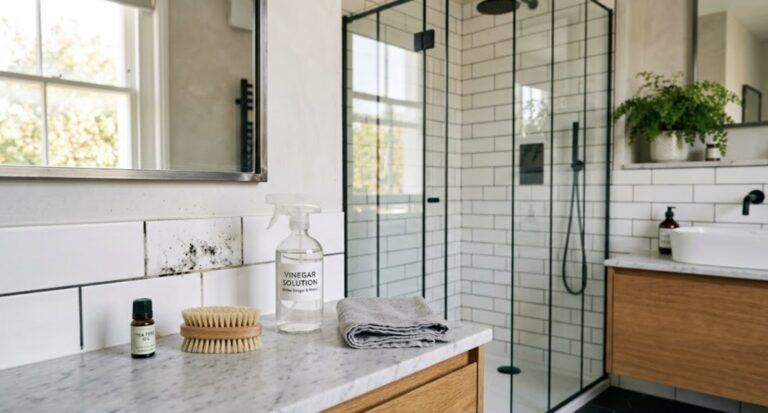
The CDC’s guidance on home hygiene backs this up: dirt and other impurities can make it harder for disinfecting chemicals to kill germs, which is exactly why cleaning always needs to happen first. Vinegar has its place too, particularly for tackling everyday limescale, though it isn’t officially recognised as a disinfectant against most viruses. If mould or mildew has crept into your grout lines, our guide on whether vinegar removes mould and mildew is worth a read before reaching for anything stronger. Rather like washing your hands before cooking, cleaning first just makes everything else work harder for you.
In my years cleaning holiday lets, the properties that smelled genuinely fresh weren’t the ones drenched in the strongest bleach. They were the ones where housekeepers cleaned thoroughly first and gave the disinfectant its full contact time afterwards, and skipping that wait by even two or three minutes is the single biggest reason disinfectant fails to do its job.

Disinfecting a bathroom from top to bottom involves cleaning surfaces first, then applying disinfectant to every hard surface for a minimum five-minute contact time, working from the cleanest areas like mirrors down to the toilet and floor last.
This checklist lists the steps for disinfecting a bathroom safely and thoroughly, from ceiling to floor.
Following these steps in order, rather than randomly, means you’re never re-contaminating a surface you’ve already disinfected, which is the single biggest mistake I see when people rush this job.
The best bathroom disinfectant contains bleach, hydrogen peroxide or a quaternary ammonium compound, and each active ingredient kills 99.9% of bacteria and viruses within five to ten minutes when used at the correct dilution on hard surfaces.
Bleach remains the gold standard for pure killing power against tough viruses like norovirus.
The CDC advises using a chlorine bleach solution mixed to around 1,000 to 5,000 parts per million, which works out to roughly 5 to 25 tablespoons of household bleach per gallon of water, or choosing an EPA-registered disinfectant product instead. Hydrogen peroxide and quaternary ammonium compounds, often labelled simply as “quats”, are gentler alternatives that still do the job without the smell or the risk to fabric and grout colour. While you’re working through the room, it’s worth checking whether your wider routine covers everything it should, and whether windows are included in a deep clean is a useful check for anyone tackling the bathroom properly. I keep a simple reference chart pinned inside my own cleaning cupboard so I never have to guess dilution ratios or contact times under pressure, and here’s the version I hand every new starter I train.

| Disinfectant | Typical Dilution | Contact Time | Best For |
|---|---|---|---|
| Chlorine bleach | 1,000-5,000 ppm (5-25 tbsp per gallon) | 5-10 minutes | Norovirus, general bacteria |
| Hydrogen peroxide | 3% ready-to-use | 5 minutes | Everyday surfaces, mould |
| Quaternary ammonium (“quats”) | Per label, usually around 1:128 | 10 minutes | Taps, tiles, worktops |
| Isopropyl alcohol | 70% solution | 30 seconds to 1 minute | Taps, handles, small items |
| Vinegar (cleaning only) | Undiluted or 1:1 with water | Not a registered disinfectant | Limescale, mild mould |
The table makes one thing obvious: contact time matters just as much as the product itself, and rushing any of these below their minimum wait leaves active germs behind.
Disinfecting a bathroom long-term means cleaning before every disinfection, giving disinfectant products a full five to ten minute contact time, and repeating high-touch areas like the toilet and taps daily rather than only once a week.
You don’t need a cupboard full of products to keep a bathroom properly disinfected. You need the right order of operations and a bit of patience for contact time.
We’ve covered cleaning before disinfecting, giving the toilet its full ten minutes, choosing the right active ingredient for the job, and understanding just how long norovirus and flu can linger on hard surfaces. Stick to the checklist above and you’ll build a routine that actually protects your household, rather than just making things smell nice for an afternoon.
A genuinely disinfected bathroom isn’t about scrubbing harder. It’s about waiting long enough.
Give yourself twenty minutes a week for the high-touch areas and a proper deep clean once a month, and you’ll rarely find yourself dealing with a bug that’s spread from the bathroom around the whole household.
How often should I disinfect my bathroom? High-touch areas like the toilet, taps and door handles should be disinfected daily, whilst a full bathroom disinfection is worth doing at least twice a week. Households with young children, pets or anyone who’s unwell should disinfect daily throughout.
Can I mix bleach and vinegar to disinfect my bathroom? No, mixing bleach and vinegar releases toxic chlorine gas and should never be attempted. Stick to one product at a time and rinse surfaces thoroughly between different cleaning agents.
What is the difference between cleaning and disinfecting? Cleaning removes visible dirt, grease and grime using soap and water, whilst disinfecting kills the bacteria and viruses left behind using a chemical disinfectant. Both steps are needed, since disinfectant struggles to work through a layer of grime.
Do I need to rinse disinfectant off bathroom surfaces? Most disinfectants need rinsing with clean water once their contact time has passed, particularly on surfaces like worktops or the bath. Check the product label though, since some sprays are designed to be left to air dry.
Is steam cleaning effective for disinfecting a bathroom? Steam cleaning above 70°C can kill many bacteria and viruses without chemicals, making it a useful option for grout and tiles. It’s less reliable for viruses like norovirus though, so a chemical disinfectant remains the safer choice during illness.
What EPA-registered products work best against bathroom germs? The EPA maintains a public list of registered disinfectants proven effective against a range of viruses and bacteria. Checking a product against this list before buying takes the guesswork out of choosing something that actually works.
Why does my bathroom smell even after disinfecting? Lingering smells usually point to mould in grout, a blocked drain, or a build-up of limescale rather than a disinfecting failure. Ventilating properly during and after cleaning, alongside addressing the source directly, usually resolves the smell within a few days.
Can natural products replace chemical disinfectants in the bathroom? Natural products like vinegar and bicarbonate of soda clean effectively but don’t meet the same kill rate as registered chemical disinfectants. For everyday freshening they’re a reasonable choice, though a proper disinfectant is still needed after illness or for the toilet.