Physical Address
304 North Cardinal St.
Dorchester Center, MA 02124
Physical Address
304 North Cardinal St.
Dorchester Center, MA 02124

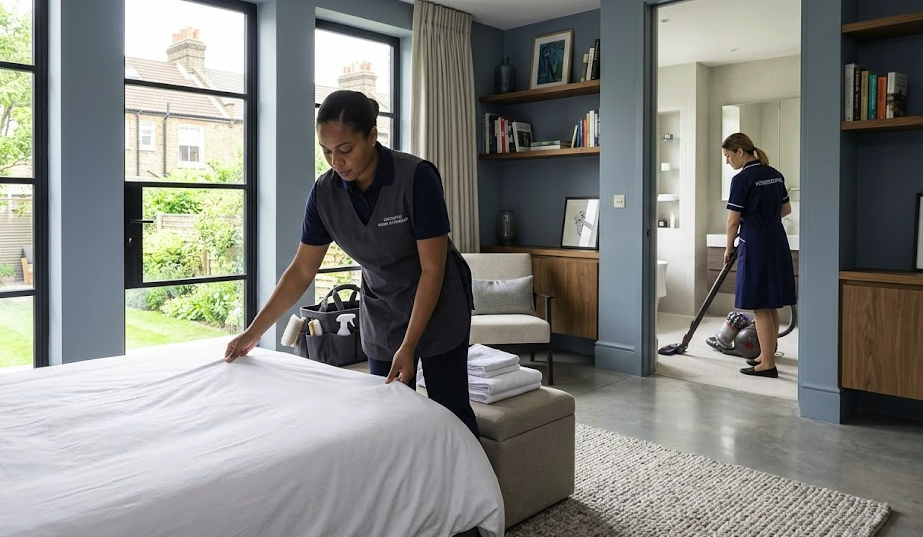
Room attendant and housekeeping are related but distinct roles within the hospitality cleaning industry, where a room attendant is a specific job title for staff who clean guest rooms in hotels, whilst housekeeping refers to the broader department managing all cleanliness operations. Both functions overlap considerably, yet the terminology carries meaningful differences depending on context, setting, and country.
Understanding these distinctions matters more than you might think, especially when hiring or applying for cleaning positions.
In this comprehensive guide, we’ll cover alternative names for room attendants, the various professional terms for housekeeping, and how staff titles differ across hospitality settings. I’ll share practical insights and real-world scenarios from my two decades working alongside hotel cleaning teams and private housekeeping staff.
A room attendant is an individual employee who cleans and prepares specific guest rooms in a hotel or accommodation, whilst housekeeping describes the entire department, system, and operational framework responsible for cleanliness across an entire property or home. Room attendants work within housekeeping.
I remember my first proper conversation with a head housekeeper at a four-star hotel in Bath, who explained the difference rather beautifully. She said the housekeeping department was like an orchestra, and her room attendants were the musicians playing the specific instruments.
That analogy stuck with me because it captures something important. Housekeeping encompasses laundry operations, public area cleaning, supply management, and team coordination, whilst room attendants focus their efforts on guest rooms specifically. According to the U.S. Bureau of Labor Statistics, maids and housekeeping cleaners perform light cleaning duties including making beds, dusting, vacuuming, and replenishing supplies in hotels and homes.
The terms get used interchangeably in casual conversation, but the hospitality industry treats them as separate concepts (rather like how a chef and a kitchen are related but different things).
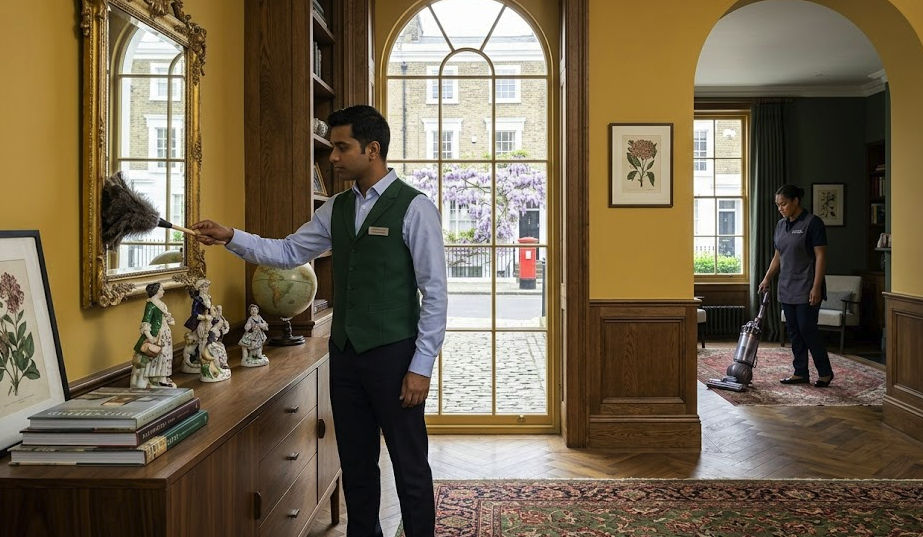
Identifying the correct cleaning role title requires examining the work setting, specific duties performed, employer type, and country of employment, with hotels using “room attendant” for staff cleaning 12-16 guest rooms per shift whilst private homes typically use “housekeeper” for similar duties. Professional terminology matters for job applications and contracts.
This checklist outlines the steps for identifying the correct cleaning role title.
Following this sequence helps you match terminology to the actual role rather than relying on assumptions about job titles.
Another term for housekeeping includes domestic services, custodial services, accommodation services, or environmental services, with each term carrying slightly different professional connotations depending on the industry context. Hospitals typically use “environmental services” whilst hotels favour “housekeeping” or “accommodation services” for their cleaning operations.
The healthcare industry has largely shifted to “environmental services” or “EVS” to emphasise the technical nature of the work.
It’s a sensible change because hospital cleaning involves infection control protocols that go far beyond traditional housekeeping. According to the Centers for Disease Control and Prevention, environmental cleaning in healthcare settings requires specific protocols to prevent healthcare-associated infections. These professionals are highly trained specialists, not simply cleaners.
In commercial settings, you’ll often see “custodial services” or “facility services” used instead. The variety of terminology reflects how diverse the cleaning industry has become, and understanding what housekeepers don’t clean helps clarify these professional boundaries.
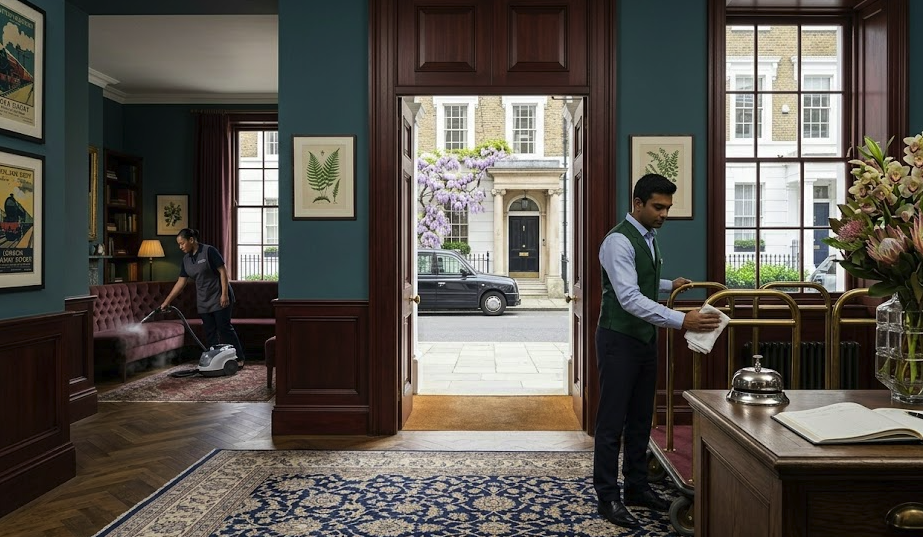
The table below shows how cleaning role titles vary by industry setting, helping you understand which terminology applies where in the professional cleaning world.
| Setting | Common Title | Alternative Title | Typical Duties |
|---|---|---|---|
| Hotel (4-5 star) | Room Attendant | Guest Room Attendant | 12-16 rooms per shift |
| Hotel (budget) | Housekeeper | Chambermaid | 18-22 rooms per shift |
| Hospital | Environmental Services Tech | EVS Associate | Patient rooms, theatres |
| Private Home | Housekeeper | Domestic Helper | Whole property cleaning |
| Office Building | Custodian | Janitor | After-hours cleaning |
| Care Home | Domestic Assistant | Housekeeping Aide | Resident rooms, communal areas |
These titles aren’t interchangeable across settings, and using the wrong term in a job application can signal unfamiliarity with the industry.
Room attendant and housekeeping roles overlap significantly but represent different scales within the cleaning profession, with room attendants being individual specialists and housekeeping describing the broader operational framework that employs them. Understanding this distinction helps both employers writing job descriptions and applicants seeking suitable positions.
The hospitality industry will continue refining these terms as the profession modernises and gains recognition for its technical complexity. Always check the specific job description rather than assuming based on the title alone, because two roles with identical names can involve very different duties depending on the employer.
Three actionable takeaways from this article:
Are room attendant and housekeeping the same job? No, a room attendant is a specific job role focused on cleaning guest rooms, whilst housekeeping refers to the entire department managing all cleanliness operations. Room attendants work as part of the broader housekeeping team.
Do room attendants and housekeepers earn the same wage? Wages vary considerably by location and employer, with hotel room attendants typically earning between £10-£13 per hour in the UK. Private housekeepers often earn more due to broader responsibilities and longer-term arrangements.
Can a room attendant become a housekeeper? Yes, room attendants frequently progress to supervisory and management positions within housekeeping departments. Many executive housekeepers started their careers as room attendants and worked through the ranks.
What qualifications do room attendants need? Room attendants typically need no formal qualifications, though employers value reliability, attention to detail, and physical stamina. Training is usually provided on the job, covering cleaning standards and safety protocols.
How many rooms does a room attendant clean daily? Room attendants typically clean between 12-16 rooms per eight-hour shift in luxury hotels, increasing to 18-22 rooms in budget accommodations. The workload depends on room size, turnover type, and hotel standards.
Is housekeeping considered skilled work? Yes, professional housekeeping involves technical knowledge of chemicals, infection control, time management, and equipment operation. The industry increasingly recognises housekeeping as skilled work requiring proper training and certification.
What’s the difference between housekeeping and janitorial services? Housekeeping focuses on guest-facing spaces and detailed cleaning of occupied areas, whilst janitorial services typically handle commercial and industrial cleaning. Janitorial work often occurs after hours in empty buildings.
Do hotels still use the term “chambermaid”? Some traditional British hotels and historic properties still use “chambermaid,” though most modern establishments have adopted “room attendant” as standard. The shift reflects efforts to modernise hospitality terminology and remove outdated gendered language.