Physical Address
304 North Cardinal St.
Dorchester Center, MA 02124
Physical Address
304 North Cardinal St.
Dorchester Center, MA 02124


Welcome, friend! After spending the last few months diving deep into the fascinating world of domestic service terminology (and drawing from my fifteen years working alongside these incredible professionals), I’m thrilled to share what I’ve discovered about this rather confusing topic. You know, just last week, I was chatting with a client who asked me this exact question – are a housekeeper and maid the same thing? – and I realized how muddled these terms have become in everyday conversation.
The short answer? Not quite, though many people use these words interchangeably nowadays.
Here’s something that might surprise you: the word you choose actually matters more than you’d think. During my years managing a cleaning service company, I’ve noticed how clients respond differently to each term. The word “housekeeper” tends to carry more professional weight these days, suggesting someone who manages household operations rather than simply cleaning.
Think of it this way – when you hear “housekeeper,” you probably imagine someone organizing your home, managing supplies, and perhaps even coordinating with other service providers. It sounds more comprehensive, doesn’t it?
The term “maid,” on the other hand, feels a bit old-fashioned to many ears. Some of my colleagues in the industry actively avoid it, feeling it carries outdated connotations of servitude. That said, plenty of professionals still proudly use the title, particularly those working in traditional hospitality settings or formal households.
What I’ve learned from talking with hundreds of domestic professionals is that context matters enormously. In hotels, “maid” remains perfectly acceptable. In private homes? “Housekeeper” or “house cleaner” tends to go over better. (Though I must admit, my grandmother still insists on calling her weekly helper “the maid,” and nobody seems to mind!)
According to the U.S. Bureau of Labor Statistics, both terms fall under the same occupational category, which tells us something about how intertwined these roles have become in modern practice.

Now this is where things get interesting! After working with dozens of cleaning companies and independent professionals, I’ve noticed distinct patterns in how these services present themselves.
Housekeeping services typically offer a broader scope of work. When I hire housekeepers for my clients, they’re not just wielding a mop and bucket. They’re managing laundry schedules, organizing pantries, handling light meal prep, and sometimes even caring for plants or pets. One housekeeper I know describes her job as “keeping the household running smoothly” – and that’s exactly right.
Maid service, conversely, usually focuses specifically on cleaning tasks.
Think vacuuming, dusting, bathroom scrubbing, and kitchen cleaning. These services often work on a set schedule (weekly, bi-weekly, monthly) and follow a consistent routine. They come in, clean efficiently, and head to their next appointment.
I remember when I first started in this industry, a mentor explained it rather like comparing a general practitioner to a specialist. Housekeepers are your GP – they handle a bit of everything. Maid services are your specialists – they excel at one specific thing: making your home sparkle.
The pricing reflects this difference too. Housekeeping services typically charge more per hour because of their expanded responsibilities. In my experience, you might pay $25-35 per hour for maid service, while comprehensive housekeeping can run $35-50 or more, depending on your location and specific needs.
| Service Type | Typical Tasks | Average Cost/Hour | Best For |
|---|---|---|---|
| Maid Service | Cleaning only (dusting, vacuuming, bathrooms) | $25-35 | Busy professionals needing regular cleaning |
| Housekeeping | Cleaning plus organizing, laundry, light cooking | $35-50 | Families needing comprehensive home management |
| Deep Cleaning Maid | Intensive one-time cleaning | $40-60 | Move-ins, spring cleaning |
| Live-in Housekeeper | Full home management, daily presence | $3000-5000/month | Large households, those needing constant support |
| Hotel Maid | Room cleaning, bed making, restocking | $15-20 | Hospitality industry only |
This table shows the key differences I’ve observed across different service types. Notice how the scope of work directly correlates with pricing – you really do get what you pay for in this industry.
The terminology has evolved tremendously over the past decade! Walking through different neighborhoods and talking to various service providers, I’ve collected quite a vocabulary list.
“Domestic professional” has gained traction, particularly among agency-placed workers. It sounds dignified and encompasses the skill involved in managing a modern household. The UK Government’s guidance on domestic workers actually uses this terminology in official documentation, which lends it additional credibility.
“House manager” is another title I’m seeing more frequently, especially for those overseeing larger homes or multiple properties.
One house manager I interviewed last month oversees three vacation properties for a family. She coordinates maintenance, manages cleaning crews, and ensures everything runs like clockwork. That’s far beyond traditional housekeeping!
In commercial settings, you’ll hear “environmental services professional” or “EVS tech” in hospitals, “room attendant” in hotels, and “facilities maintenance” in offices. These titles reflect the professionalization of the industry – and honestly, it’s about time.
Some independent contractors prefer simple, descriptive titles like “home cleaner” or “residential cleaner.” These terms are straightforward and set clear expectations. No confusion about duties, no outdated connotations – just honest description of the service provided.
(I’ve even met a few who call themselves “domestic engineers” – though that one hasn’t quite caught on yet!)
Let me address the primary question directly now that we’ve explored the nuances.
While housekeepers and maids often perform overlapping duties, they’re not exactly the same thing in today’s domestic service market. A maid traditionally focuses on cleaning tasks – making beds, scrubbing bathrooms, vacuuming floors, and dusting surfaces. A housekeeper, meanwhile, typically manages broader household operations including organizing, laundry management, light cooking, grocery shopping, and sometimes even scheduling repairs or supervising other service providers. The distinction becomes clearer when you consider that many housekeepers incorporate maid duties into their work, but not all maids expand into full housekeeping responsibilities. Related roles like house managers, domestic professionals, and residential cleaners each carry their own specific connotations and expectations in the modern marketplace.
Oh, this brings back memories! When I first entered this industry, I assumed everyone would be wearing those traditional black dresses with white aprons. How wrong I was!
The uniform situation today varies wildly depending on the setting. Hotels? Absolutely – most still require uniforms, though they’re far more practical than the frilly outfits of yesteryear. Think polo shirts with company logos and comfortable slacks. The Centers for Disease Control and Prevention even provides guidelines for appropriate work attire in cleaning professions, emphasizing safety and hygiene over appearance.
Private residential cleaners often opt for company t-shirts or simply comfortable, professional clothing.
I know several independent housekeepers who’ve developed their own “uniform” – not because anyone requires it, but because it simplifies their morning routine. One told me, “I have five identical black shirts and khaki pants. No decisions needed!”
High-end households sometimes still prefer traditional uniforms. I recently placed a housekeeper with a family who requested formal attire. We settled on a modern interpretation – tailored gray dresses that looked professional without feeling costume-like.
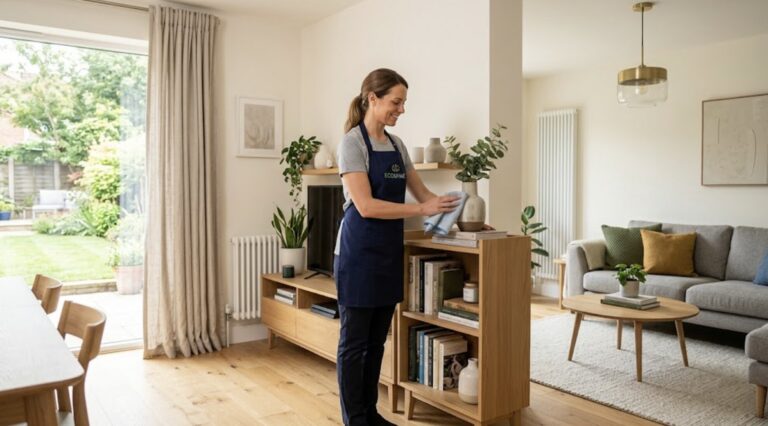
The younger generation of domestic professionals tends to resist uniforms, viewing them as outdated. Many agencies have adapted by offering branded aprons or shirts that workers can pair with their own clothes. It’s a nice compromise that maintains professionalism while respecting individual preferences.
Here’s what I find most interesting: clients rarely care about uniforms anymore. They want reliability, thoroughness, and trustworthiness.
What someone wears while achieving those goals? Pretty irrelevant.
After helping hundreds of families find the perfect domestic help, I’ve developed a reliable process:
Looking back over everything we’ve discussed, the distinction between housekeepers and maids really comes down to scope and expectations. While the terms often overlap in casual conversation, understanding the nuances helps you make better decisions for your household needs.
The beauty of today’s domestic service industry lies in its flexibility. Whether you need someone to deep-clean your bathroom weekly or manage your entire household’s operations, there’s a professional ready to help. The key is using the right terminology to find them!
Remember, these dedicated professionals make our lives immeasurably easier. Whatever title they prefer – housekeeper, maid, domestic professional, or house cleaner – they deserve our respect and fair compensation for their valuable work.
As you move forward with hiring domestic help, focus less on titles and more on finding someone whose skills match your needs. Communicate openly, treat them professionally, and you’ll likely find yourself wondering how you ever managed without them.
Key Takeaways:
What’s the main difference between a housekeeper and a maid? A housekeeper typically manages overall household operations including organizing, laundry, and sometimes cooking, while a maid primarily focuses on cleaning tasks. The distinction often depends on the specific arrangement and employer expectations.
Which term is more appropriate in 2025 – housekeeper or maid? “Housekeeper” is generally preferred in professional settings as it suggests broader responsibilities and skills. However, “maid” remains acceptable in hospitality contexts and some traditional households.
How much should I expect to pay for housekeeping versus maid service? Maid services typically cost $25-35 per hour for cleaning-only tasks. Housekeeping services run $35-50 per hour due to expanded responsibilities including organization and household management.
Do housekeepers clean or just organize? Most housekeepers do both cleaning and organizing as part of their comprehensive household management. The exact balance depends on your specific needs and agreement.
Can a maid become a housekeeper? Absolutely – many housekeepers start as maids and expand their skills over time. The transition often happens naturally as they learn client preferences and take on additional responsibilities.
What should I call my house cleaner? Ask them directly what title they prefer – some like “housekeeper,” others prefer “house cleaner” or simply their first name. Respecting their preference shows professionalism and courtesy.
Is “domestic worker” an offensive term? Not at all – “domestic worker” or “domestic professional” are neutral, professional terms widely used in employment law and contracts. Many workers prefer these titles for their dignified, professional connotation.
Do I need both a housekeeper and a maid? Most households don’t need both unless you have a large home with extensive needs. A good housekeeper can handle maid duties, or you might hire specialized help for specific tasks.
What’s the difference between a housekeeper and a house manager? House managers oversee multiple staff members and handle complex household operations including scheduling contractors and managing budgets. Housekeepers typically work independently on day-to-day household tasks. For more detailed information about domestic service roles, the Wikipedia entry on domestic workers provides comprehensive historical and contemporary context.
Should housekeepers bring their own cleaning supplies? This varies by arrangement – independent housekeepers often bring supplies and charge accordingly, while others prefer using the client’s products. Discuss this during the hiring process to avoid confusion.
What tasks are outside a typical housekeeper’s duties? Heavy lifting, exterior window cleaning on upper floors, electrical work, and childcare (unless specifically agreed upon) typically fall outside standard housekeeping. Always clarify boundaries during initial discussions.
How often should I have a housekeeper or maid come? Weekly or bi-weekly service works for most households, though busy families might prefer multiple visits per week. Start with weekly service and adjust based on your needs and budget.