Physical Address
304 North Cardinal St.
Dorchester Center, MA 02124
Physical Address
304 North Cardinal St.
Dorchester Center, MA 02124


Professional house cleaners clean homes quickly by combining a fixed room order, pre-stocked cleaning caddies and time-boxed techniques like the 10 10 10 rule. A trained cleaner can finish tasks in a fraction of the time an untrained person would need.
It’s all method, not magic.
In this guide, we’ll cover the techniques behind the speed, the famous 10 10 10 rule, and exactly what a cleaner should realistically achieve in two hours. I’ll also share a few habits picked up over years in the industry, the kind no training manual quite captures.
Professional cleaners clean faster by working in a fixed top-to-bottom, left-to-right pattern within each room, completing one zone before moving to the next. Zone-based cleaning cuts wasted movement by roughly 40 percent compared to random, room-hopping approaches.
Most of the speed comes down to one boring truth: professional cleaners simply never clean the same spot twice.
I remember my first week shadowing a senior cleaner who could turn around a three-bed semi in under ninety minutes. She moved through each room like she was following an invisible script, top shelf to skirting board, never doubling back. Rather like a chef working a busy kitchen pass, every motion had already been decided before she walked through the door.
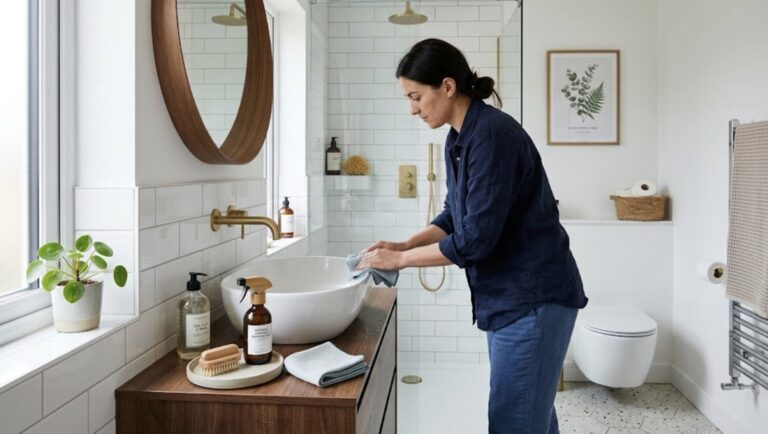
Tools matter too. A good professional carries colour-coded microfibre cloths (one colour per surface type, to stop cross-contamination) and a single caddy stocked with everything needed for that visit, so there’s no traipsing back to the van for forgotten spray.
Do you need formal training to clean this fast? Not necessarily, though it certainly speeds up the learning curve, and it’s worth reading more about whether housekeepers need any qualifications if you’re weighing it up as a career.

A cleaner can complete a kitchen, bathroom and two living spaces within 2 hours by following a fixed checklist of priority tasks, working room by room without backtracking to keep momentum and avoid wasted, repeated effort.
This checklist lists the steps for cleaning a home fast within a two-hour visit.
This order isn’t arbitrary. There’s a fuller breakdown of what order to clean your house in if you’d like the longer version, with reasoning behind each step.
Two hours feels tight until you’ve done it a hundred times. After that, it’s just rhythm.
Housekeepers clean faster by carrying a fully stocked caddy with all-purpose spray, microfibre cloths and a scrub brush into every room, eliminating return trips. A stocked caddy alone can save 10 to 15 minutes per average UK home visit.
This is really the heart of how professional house cleaners clean so fast: it’s the combination of zone cleaning, the 10 10 10 rhythm, and never carrying an empty hand from one room to another. Add in dwell-time chemistry and a refusal to backtrack, and you’ve got the entire system in one sentence.
A regular housekeeper develops this rhythm naturally after a few months on the same properties, learning exactly where the kettle limescale builds up or which bathroom always needs that bit of extra attention.

| Task | Professional Cleaner | Untrained Cleaner |
|---|---|---|
| Full bathroom | 12-15 minutes | 30 minutes |
| Full kitchen | 15-20 minutes | 35-40 minutes |
| Bedroom (dust and vacuum) | 8-10 minutes | 15-20 minutes |
| Living room | 10-12 minutes | 20-25 minutes |
| Hallway and stairs | 5-7 minutes | 10-15 minutes |
The figures above show a fairly consistent pattern: trained cleaners take roughly half the time of an untrained pass, mostly thanks to product knowledge and fewer wasted trips between rooms.
Not every visit needs the same depth, mind you. Knowing when a quick maintenance clean will do versus when a proper deep clean is required (and whether a deep clean is actually worth paying for) saves enormous amounts of time over a working week.
There are also a few habits that quietly slow housekeepers down without them ever realising it, and our guide to housekeeping dos and don’ts covers the most common culprits.
When you strip it all back, how professional house cleaners clean so fast comes down to a handful of repeatable habits rather than any secret product or superhuman energy. It’s the fixed zone order, the 10 10 10 rhythm, the fully stocked caddy and a checklist that never changes from house to house.
None of it requires special strength or talent, just consistency applied visit after visit until it becomes automatic.
If you’re trying to speed up your own cleaning, pick one habit from this guide, perhaps the zone method or the ten-minute bursts, and use it for a fortnight before adding another. Small, repeated changes beat trying to overhaul your whole routine in one go.
Key takeaways:
How long should it take to clean an average house? A trained cleaner typically clears a three-bedroom home in 90 to 120 minutes. An untrained pass on the same property usually takes closer to three or four hours.
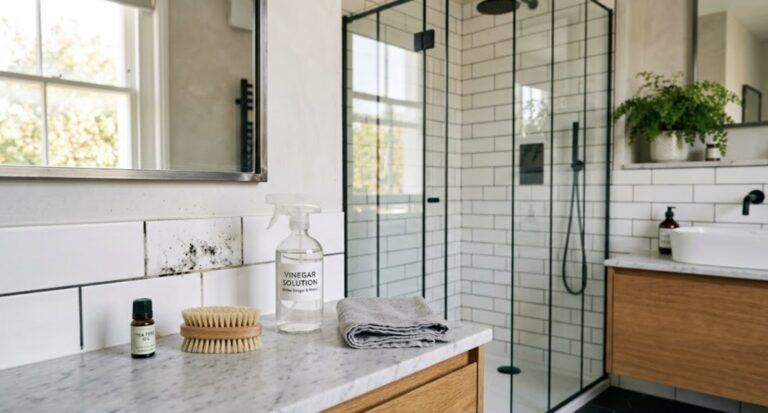
What is the fastest way to clean a bathroom? Spray every surface with an all-purpose cleaner first and let it dwell for five minutes before touching anything. Working while the product sits saves several minutes compared to scrubbing the moment it’s applied.
Do professional cleaners use different products to the ones I buy in the supermarket? Many professionals do use trade-strength versions of familiar supermarket brands. The bigger difference tends to be technique and dwell time rather than the product itself.
How many rooms can a cleaner do in an hour? A skilled cleaner can usually manage one full bathroom plus one bedroom, or a similar combination, within an hour. Pace varies depending on how cluttered or heavily soiled each room is.
What is the 10 10 10 cleaning rule again, briefly? It’s a three-stage timer system: ten minutes decluttering, ten minutes wiping surfaces, and ten minutes on the floor. The structure stops any single room eating into the rest of the schedule.
Should I declutter before the cleaner arrives? Clearing surfaces beforehand lets a cleaner spend their time actually cleaning rather than tidying. It can shave a noticeable amount of time off a standard visit, especially in kitchens.
Is hiring a professional cleaner worth the cost? For many households, yes, particularly when time is tight or a property is large. The value really comes down to how much your own time is worth against the hourly rate.
What’s the difference between a housekeeper and a cleaner? A housekeeper typically handles broader, ongoing housekeeping duties such as laundry and organisation alongside cleaning. A cleaner is usually focused specifically on the cleaning tasks themselves during a set visit.