Physical Address
304 North Cardinal St.
Dorchester Center, MA 02124
Physical Address
304 North Cardinal St.
Dorchester Center, MA 02124

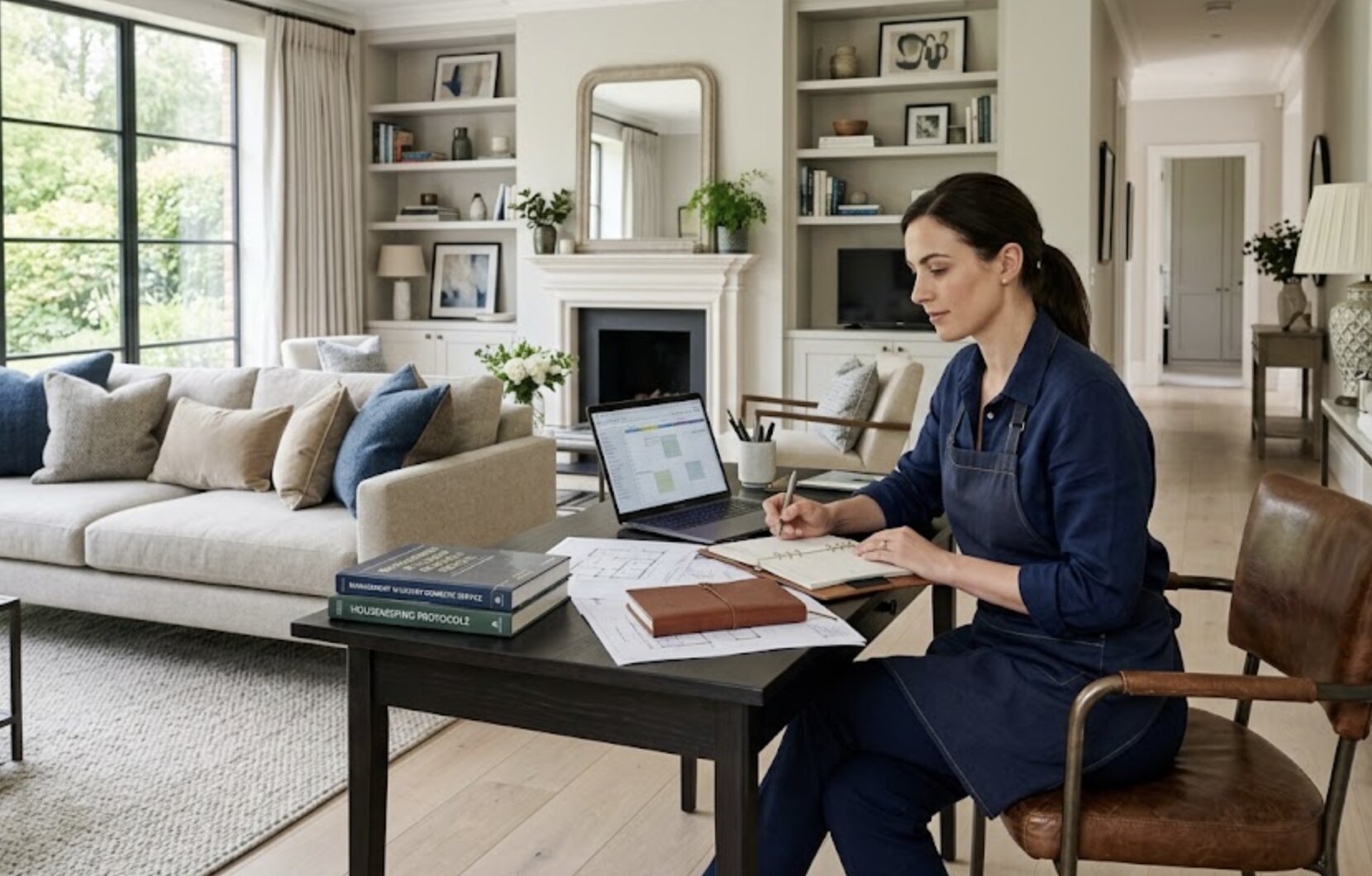
No, you do not need a degree for housekeeping. Most professional housekeeping roles in hotels, private households, and cleaning services require practical skills, a reliable attitude, and on-the-job experience rather than any formal academic qualification.
That said, the right credentials can open significantly better doors.
In this guide, we’ll cover what qualifications housekeepers actually need, which vocational courses are worth considering, and how certifications like NC2 work in practice. I’ll share practical guidance and real-world insight from years spent working in and around the professional cleaning industry, so you can figure out the fastest route into a housekeeping career that suits you.
You do not need qualifications to be a housekeeper in most entry-level roles. The majority of domestic and hotel housekeeping positions in the UK are filled by candidates with no formal certificates, provided they can demonstrate reliability, attention to detail, and basic cleaning competency.
That’s the honest answer, and it’s genuinely good news if you’re weighing up whether to invest time and money in training before you even start.
Most employers hiring housekeepers, whether for a family home, a boutique hotel, or a serviced apartment block, are far more interested in your references than your certificates. Can you be trusted with keys to someone’s home? Will you turn up on time? Do you know the difference between a microfibre cloth and a scouring pad? Those practical qualities count for far more than a framed qualification on your wall.
That said, having no qualifications does put a ceiling on your earning potential and career progression. Entry-level positions pay somewhere between the national living wage and around £12 to £14 per hour in most parts of the UK. If you want to move into head housekeeper, executive housekeeper, or housekeeping manager roles in larger hotels, qualifications start to matter considerably more. You can explore more about whether housekeepers need to be licensed for a clearer picture of the regulatory side of things.
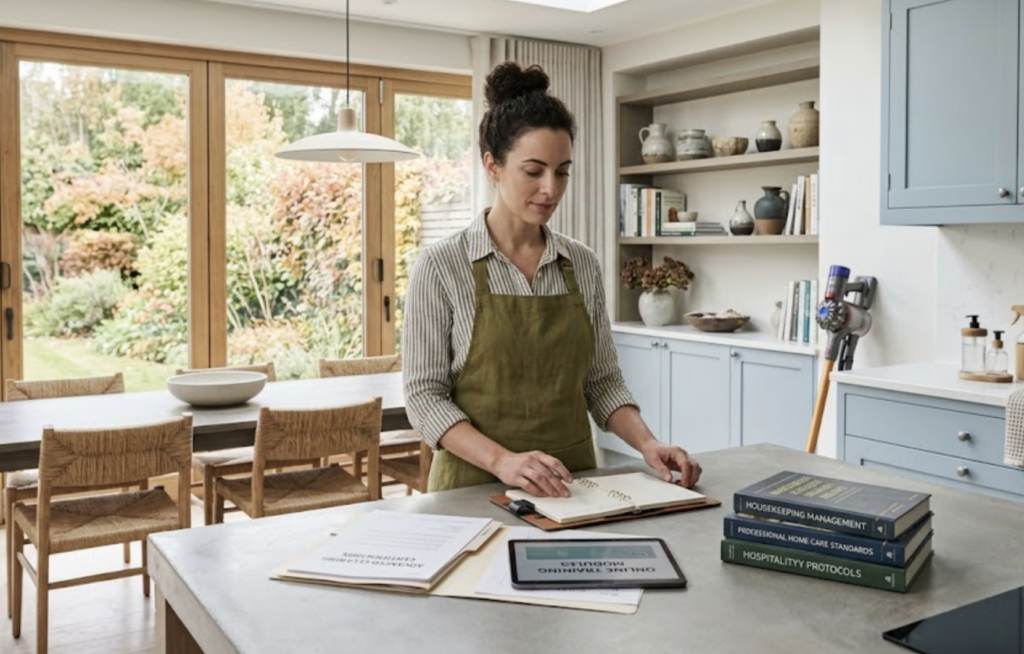
Getting started in professional housekeeping involves a clear sequence of practical decisions, from understanding entry requirements through to securing your first role and building toward certification, with most people moving from first application to paid work within four to six weeks.
This checklist outlines the steps in the order you should approach them.
NC2 for housekeeping is obtained through the Technical Education and Skills Development Authority (TESDA) in the Philippines, which awards National Certificate Level 2 to candidates who pass a competency assessment covering room preparation, bed-making, bathroom servicing, and linen handling, typically after completing a registered training programme.
NC2 is a Filipino vocational qualification, and it’s worth explaining clearly what it involves, especially since a good number of Filipino housekeepers work internationally in hotels and private households.
| Competency Unit | Core Skills Assessed | Minimum Standard |
|---|---|---|
| Provide Housekeeping Services | Room preparation, guest communication | Meets TESDA competency benchmark |
| Clean and Prepare Rooms for Incoming Guests | Bed-making, surface cleaning, waste removal | Hotel industry standard |
| Provide Valet/Butler Service | Personal guest services, clothing care | Demonstrated in practical assessment |
| Launder Linen and Guest Clothes | Sorting, washing, pressing, folding | Correct temperatures and processes |
| Clean Public Areas and Equipment | Lobbies, lifts, corridors | Chemical safety compliance |
The assessment itself is conducted by a TESDA-accredited Assessment Centre and consists of a demonstration of competency across these core units. You don’t need to complete a formal training programme beforehand if you already have the practical skills, because TESDA also offers a Recognition of Prior Learning pathway, which assesses your existing experience rather than requiring you to sit through training you’ve already effectively done on the job. Most candidates find the written component straightforward, whilst the practical demonstration is where assessors pay close attention to technique, particularly around chemical handling and bed-making precision.
You do not need a degree for housekeeping, and this remains true whether you’re applying for your first domestic cleaning role or targeting a senior position in a five-star hotel. What you do need is practical competency, professional reliability, and a willingness to build your credentials over time through vocational training and genuine on-the-job experience.
The most successful housekeeping professionals I’ve encountered over the years didn’t start with a qualification. They started with genuine pride in their work, built a solid reputation with their first few employers, and then layered certifications on top of an already-strong practical foundation.
If you’re in the UK and serious about housekeeping as a career, a BICSc certificate alongside 12 to 18 months of varied experience will position you well for supervisory roles. If you’re based in the Philippines or working internationally in contexts where NC2 is valued, the TESDA route is clear and achievable. And if you’re simply looking to start earning in a reliable, in-demand profession without years of study, housekeeping is one of the most accessible and genuinely rewarding careers available.
Start where you are. Get good at the basics. Then build from there.
Key Takeaways:
Do you need a degree for housekeeping in the UK? No, a degree is not required for housekeeping roles in the UK. Most employers prioritise practical experience, personal references, and a valid DBS check over any academic credential. For a full overview of housekeeping as a career path, the Wikipedia entry on housekeeping provides useful background on the profession globally.
What qualifications do you need to be a housekeeper in a hotel? Hotel housekeeping positions typically require no formal qualifications at entry level, though a Level 1 or Level 2 Award in Cleaning and Support Services significantly improves your prospects for supervisory roles. Larger hotel chains often provide their own internal training programmes that lead to nationally recognised certificates.
Is there a professional housekeeping certification worth getting? The BICSc Cleaning Operative Proficiency Certificate is widely regarded as the most respected professional certification for housekeepers in the UK. It covers more than 20 individual cleaning competencies and is recognised across healthcare, hospitality, and domestic service sectors.
How long does it take to qualify as a housekeeper? Most vocational housekeeping qualifications can be completed within three to six months alongside paid work. The BICSc proficiency certificate can be built unit by unit, making it flexible enough to fit around a standard working schedule without any need for full-time study.
Can I become a housekeeper with no experience? Yes, many housekeeping employers will consider candidates with no prior professional experience, particularly for domestic and entry-level hotel roles. A positive attitude, a clean background check, and willingness to learn on the job are typically sufficient to secure a first position.
What is NC2 housekeeping and who needs it? NC2 housekeeping is a National Certificate Level 2 qualification awarded by TESDA (Technical Education and Skills Development Authority) in the Philippines. It is primarily relevant for Filipino housekeeping professionals and is commonly required or preferred by international hotel employers recruiting from the Philippines.
Is housekeeping considered a skilled profession? Housekeeping is classified as a skilled vocation requiring competency in chemical handling, infection control, linen management, and property care. Whilst it is not classified as a skilled trade in the same way as plumbing or electrical work, professional housekeepers operating in healthcare or luxury hospitality settings require considerable technical knowledge.
What is the difference between a housekeeper and a cleaner? A housekeeper typically manages broader domestic responsibilities including organisation, laundry, and sometimes basic household administration, whilst a cleaner focuses primarily on surface cleaning tasks. In hotel environments, the housekeeper role is more guest-facing and involves higher standards of presentation and guest-readiness checking.